Sensirion Connected Solutions — a one stop-shop for continuous methane emissions monitoring
While CO₂ is often at the center of attention as the main driver of climate change, methane is responsible for roughly 30 % of global warming. Its warming potential is 84 times greater than that of CO₂ over a 20-year period. New regulations and ESG standards, investors and the public are addressing methane emissions with a distinct call to action. Many industries such as the energy sector must act, and act quickly. Whether in the US, Canada or the EU—new regulations to prevent methane leaks will soon come into force and pave the way for a more sustainable future.
Why methane mitigation matters
Undetected leaks lead to direct product loss and significant revenue shortfalls. At the same time, regulatory pressure is increasing as authorities introduce stricter controls on emissions and safety. Investors, society and insurers are also increasingly expecting transparency and demonstrably safe and sustainable operating processes. However, traditional periodic or manual measurements create blind spots and often lead to delayed detection of critical deviations. If incidents or inaccurate reports occur, companies face not only financial damage but also long term reputational damage.
Comprehensive product portfolio to establish us as a leading service provider
Our continuous methane emissions monitoring solutions are highly innovative end-to-end IoT solutions that reliably support customers in the oil and gas industry in detecting, localizing and quantifying methane emissions in a cost-efficient manner. With the acquisition of Kuva Systems in June 2025, we offer our customers a comprehensive product portfolio: Nubo Sphere, a fenceline monitoring solution; Kuva, an optical gas imaging solution for upstream and midstream applications; and Nubo Sentry, a close-proximity monitoring solution for on- and offshore alert thresholds.
Advanced sensor-based IoT solution
The three end-to-end platforms combine proprietary methane sensing and optical gas imaging technologies with powerful data analytics, root-cause diagnostics and expert field support.
Our Nubo solution is based on Sensirion’s state-of-the-art sensor technology. However, good sensor technology is important but needs to be complemented by advanced analytics and comprehensive software to transform 28 sensor data into meaningful and actionable insights for the customer. We were already able to significantly optimize the performance of the algorithm last year. Over the next few months, we want to further optimize the presentation of the data. The aim is to integrate all three systems and their sensor and imaging data into a single platform that delivers joint detection, localization and quantification—and ultimately far more reliable, actionable alerts for customers.
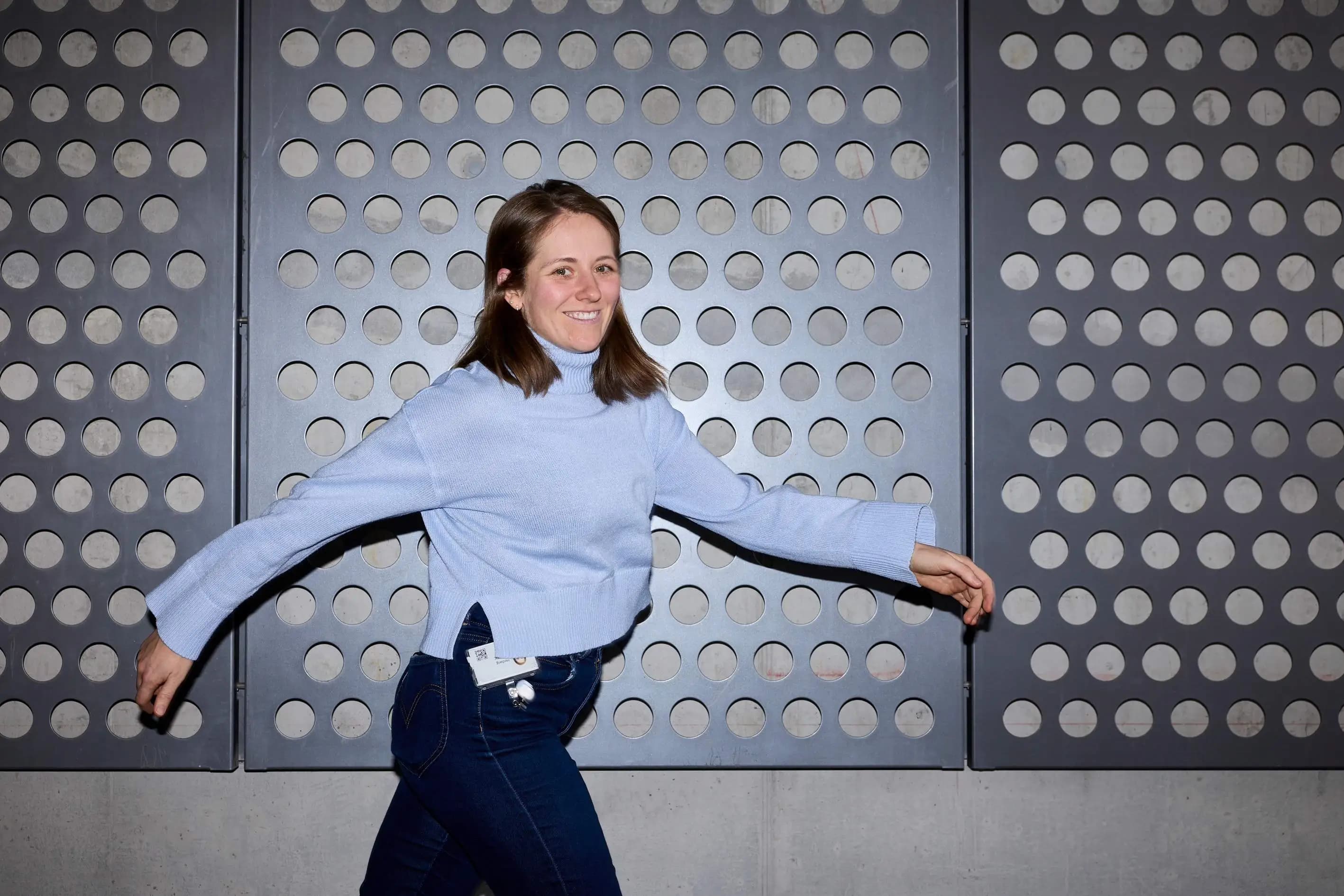
We introduce Hedwig Knötig and Thomas McArthur, our experts in continuous methane emissions monitoring at Sensirion Connected Solutions. Hedwig works as Product Manager and ensures the translation of methane detection data into decisive measures for customers. Thomas works as Director of Operations for the Kuva product line and is responsible for the development and production of optical gas imaging solutions.
How is continuous monitoring of methane emissions changing the oil and gas industry?
Hedwig: Continuous monitoring shifts operators from reactive, periodic surveys to a more predictive approach —spotting rising emissions early so they can deploy resources more efficiently and prevent major leaks.
Thomas: There have been a number of academic studies over the last several years showing that methane emissions are much higher than those reported by industry. This is generally because many emissions are intermittent, have only been required to be estimated or simply have been from sources that are difficult to measure using traditional techniques. Continuous monitoring is a conceptual shift for operators, going from periodically looking for “what emissions are occurring at this moment” to becoming much more aware of emission frequency, duration and, thus, total emissions. It provides a complete picture of what is going on at their sites.
What do you personally contribute to Sensirion Connected Solutions becoming the leading service provider for continuous methane emissions monitoring?
Hedwig: In my role as Product Manager, I work closely with customers, R&D and our Sales team to ensure our solution delivers meaningful, actionable value in the field. It’s challenging for me to find the right balance between customer needs, technical feasibility and commercial goals.
Thomas: Having been with the team for nearly a decade, I have fostered relationships with key stakeholders (regulatory, end users, academics) who help not only with product refinement, but also with building the direction of the industry and how continuous monitoring is adopted. I have the fortunate role of being involved in many aspects of the business from technical to cultural to operational, and have leveraged that to build a team and an environment that can deliver to the needs of the customer.
Optical imaging and photoacoustic sensing—how do they complement each other?
Hedwig: Nubo offers highly sensitive detection even under challenging environmental conditions, and the Kuva camera adds precise localization, allowing the combined system to deliver significantly more accurate insights.
Thomas: Now that we have a comprehensive portfolio of products, we are able to provide excellent sensitivity, coverage and context for all assets from simple upstream sites to complex gas processing plants and offshore platforms. Each of our products offers a slightly different advantage, but our customers are no longe required to sacrifice one for the sake of another.
The acquisition in June 2025 has made this one-stop shop possible. How do you personally benefit from the collaboration?
Thomas: Joining the worlds of Nubo and Kuva has offered a unique and rewarding challenge for me. The outputs from each are different, and turning complex disparate data into a simple customer experience is no small feat. Attempting to do so is offering an exciting opportunity to learn, share and grow alongside some of the brightest people in the field.
Hedwig: Both product suites come with their own histories and distinct architectural philosophies. Integrating them is certainly challenging, but it also creates a rare opportunity Growth areas Sensirion Annual Report 2025 to revisit earlier design decisions and look at familiar problems from a fresh angle. Working closely with colleagues who bring deep, long-standing experience from the oil and gas industry gives me access to new perspectives and a wealth of practical knowledge. For me personally, this collaboration broadens my thinking, enriches my decision making and allows me to learn from a more diverse and highly skilled team. What are the challenges in the next three years?
Hedwig: A key challenge will be convincing more of the industry of the value of continuous monitoring—demonstrating equivalency to established methods, proving clear return on investments and advocating for its recognition in evolving regulations. Enabling our toolbox to support compliance with upcoming European and Canadian methane rules would be a great upside and strengthen our position in the market.
Thomas: From a technical perspective, we have the most sophisticated and accurate products available to market today. However, from a marketing perspective, we have been more focused on the tools we offer rather than problems we solve. Evolving from a primarily tech-driven company to a market-oriented organization that focuses on delivering value to customers will be a key challenge to unlock broad market adoption.
Any final thoughts?
Hedwig: We’re building more than technology—we’re helping customers operate more cleanly, safely and efficiently in a rapidly evolving regulatory landscape. And with the acquisition of Kuva, we not only expanded our technology portfolio but also gained talented colleagues with deep oil and gas expertise, which strengthens our ability to deliver real impact.
Thomas: Well said, Hedwig! As a long time “Kuvan” and new “Sensi”, it has been a positive start to becoming one unified team; cultural alignment between the groups has been excellent. The proximity to and relationships with customers that we now share has offered greater exposure and opened new avenues for each of our products.
Building momentum and refining the overall user experience will be a challenging and rewarding experience to come!
Read our 2025 Annual Report
- Download here
- 03/2026
- 7.5 MB