CO₂ monitoring for better sleep quality
Understanding how ventilation impacts sleep, health, and recovery
Sleep is essential for cognitive performance, emotional balance, and physical recovery. Deep sleep supports memory consolidation and physiological restoration yet sleep disorders and insufficient sleep are increasingly common. According to ResMed’s 2025 Global Sleep Survey, one third of people struggle to fall or stay asleep at least three nights per week, and only four out of seven nights are perceived as truly restful. Despite increased awareness of sleep health, we tend to overlook a silent factor: the air we breathe at night.
Unlike poor sleep, which we feel immediately, poor ventilation and elevated CO₂ levels are invisible and odorless. Carbon dioxide (CO₂) is a naturally occurring gas exhaled by humans and widely used as a reliable proxy for ventilation adequacy. In enclosed indoor environments such as bedrooms, CO₂ levels can rise rapidly overnight due to respiration and insufficient ventilation. While CO₂ is not toxic at typical indoor concentrations, growing scientific evidence shows that poor ventilation can impair sleep quality, alter brain function, and disrupt autonomic regulation. Continuous CO₂ monitoring is therefore essential to identify ventilation issues and enable targeted improvements in bedroom air quality.
Why choose Sensirion for CO₂ monitoring?
By integrating Sensirion CO₂ sensors, companies can provide solutions that directly address the impact of ventilation on sleep quality, differentiate end-user devices in the market and offer users actionable insights for healthier living.
Proven sensing technologies
Industry-leading photoacoustic NDIR and thermal conductivity CO₂ sensors deliver direct, science and technology backed solutions for stable measurements across multiple applications.
Broad portfolio for multiple applications
From high-accuracy HVAC sensors to ultra-compact, low-power solutions for battery-operated consumer devices.
Building standard compatibility
Sensirion’s photoacoustic NDIR CO₂ sensors support major indoor air quality standards, including WELL, RESET, LEED, California Title 24, and ASHRAE 62.1.

Learn more through our dedicated whitepaper
It provides in-depth insights into the relationship between ventilation, indoor air quality, and restorative sleep. It highlights the scientific background and outlines practical approaches for integration into modern applications.
Download hereTarget applications for CO₂ monitoring during sleep
CO₂ monitoring during sleep can be integrated into various residential, consumer, and smart devices, such as:
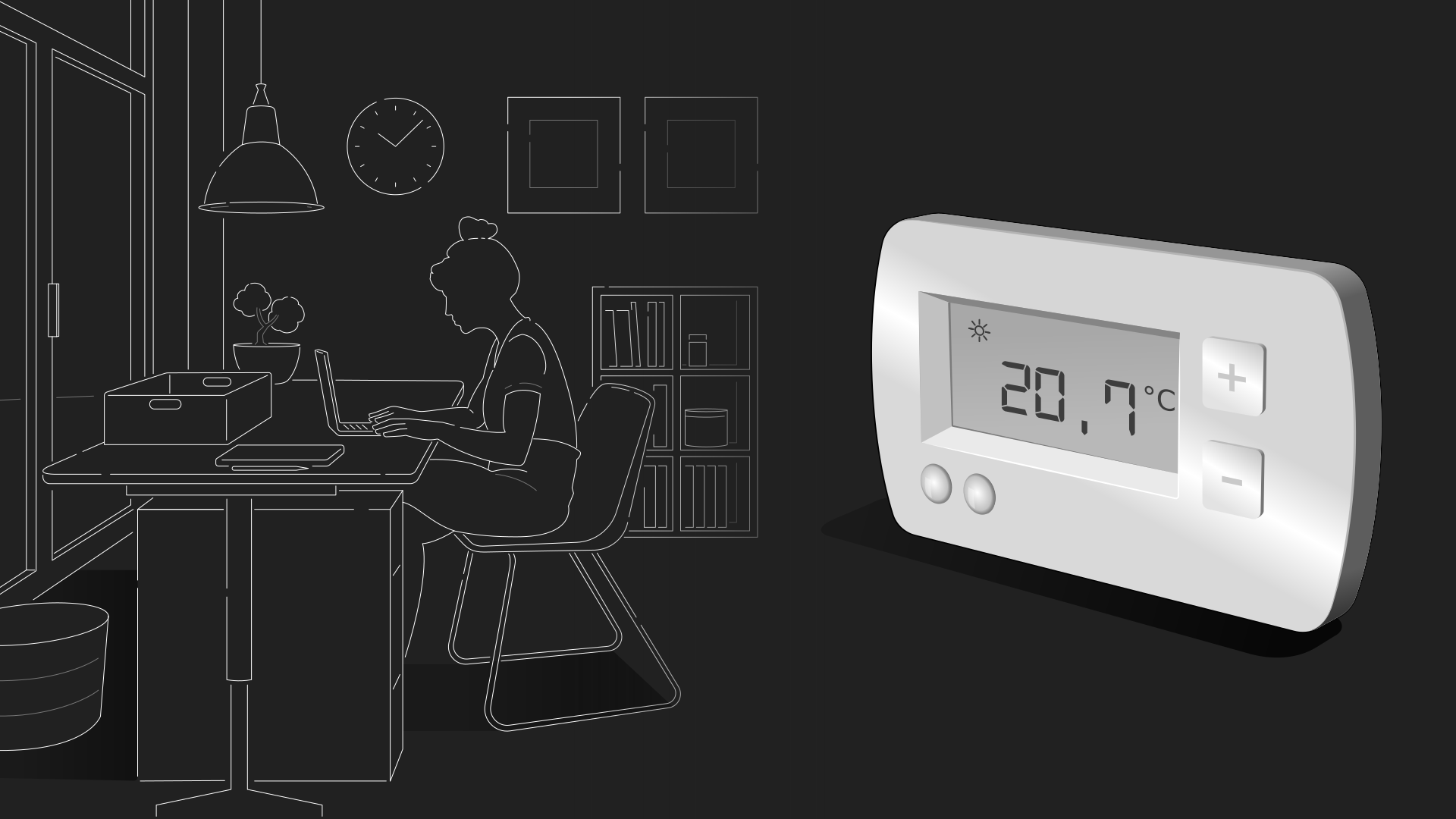
- Thermostats
- Indoor air quality monitors
- Air purifiers
- Air conditioners
- HVAC systems
- Smartphones
- Smartwatches
- Alarm clocks
- Smart speakers
- Earbud cases
Related sensors
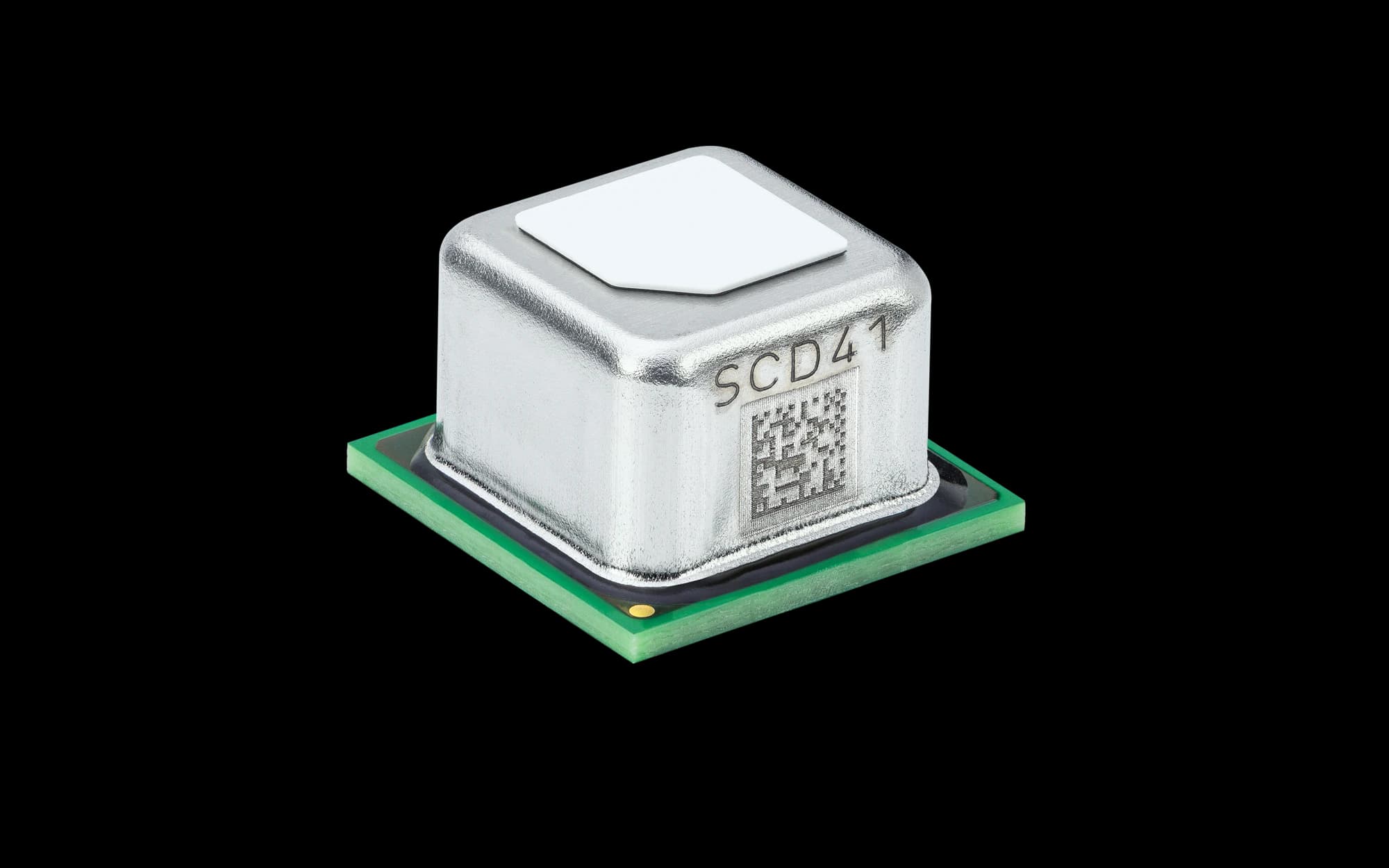
Improved CO₂ accuracy with extended measurement range and single-shot mode
The SCD41 provides improved CO2 measurement accuracy specifications and features an extended measurement range of 400 to 5'000ppm as well as single-shot mode operation. In addition to the WELL Building Standard™, SCD41 provides compatibility with the requirements of RESET® and California Title 24.
The SCD4x is Sensirion’s second generation series of optical CO2 sensors. The sensor series builds on the photoacoustic NDIR sensing principle and Sensirion’s patented PASens® and CMOSens® technology to offer accuracy at an attractive price and small form factor. SMD assembly allows cost- and space-effective integration of the sensor combined with maximal freedom of design. On-chip signal compensation is realized with the built-in SHT4x humidity and temperature sensor. Tape and reel packaging make the SCD4x ideal for high-volume applications.
Carbon dioxide is a key indicator for indoor air quality (IAQ), as high levels compromise human cognitive performance and well-being. The SCD4x enables smart ventilation regulation to help improve energy efficiency and human comfort. Moreover, indoor air quality monitors and other connected devices based on the SCD4x can help maintain low CO2 concentrations for a healthy, productive environment.
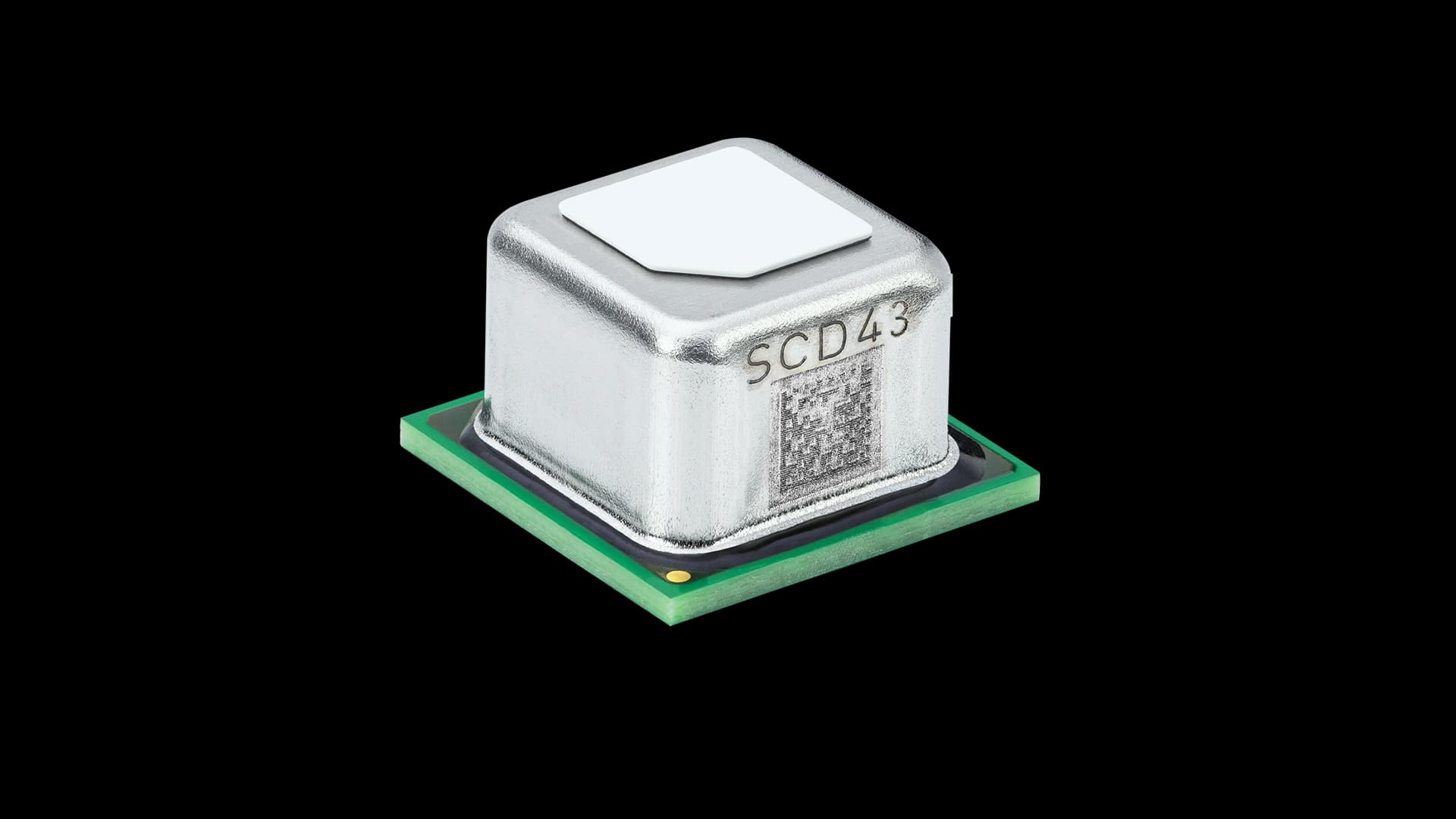
High CO₂ accuracy with comprehensive building standard compatibility
The SCD43 delivers a best-in-class accuracy specification of +- (30ppm + 3% m.v.) as well as compatibility with the most stringent building standards, including ANSI/ASHRAE 62.1-2022 Draft Addendum d, California Title 24, RESET® grade B and WELL Building Standard™ (WELL v2). Furthermore, SCD43 features an extended specified range up to 5'000 ppm and single shot operation mode.
The SCD4x is Sensirion’s second generation series of optical CO2 sensors. The sensor series builds on the photoacoustic NDIR sensing principle and Sensirion’s patented PASens® and CMOSens® technology to offer accuracy at an attractive price and small form factor. SMD assembly allows cost- and space-effective integration of the sensor combined with maximal freedom of design. On-chip signal compensation is realized with the built-in SHT4x humidity and temperature sensor. Tape and reel packaging make the SCD4x ideal for high-volume applications.
Carbon dioxide is a key indicator for indoor air quality (IAQ), as high levels compromise human cognitive performance and well-being. The SCD4x enables smart ventilation regulation to help improve energy efficiency and human comfort. Moreover, indoor air quality monitors and other connected devices based on the SCD4x can help maintain low CO2 concentrations for a healthy, productive environment.
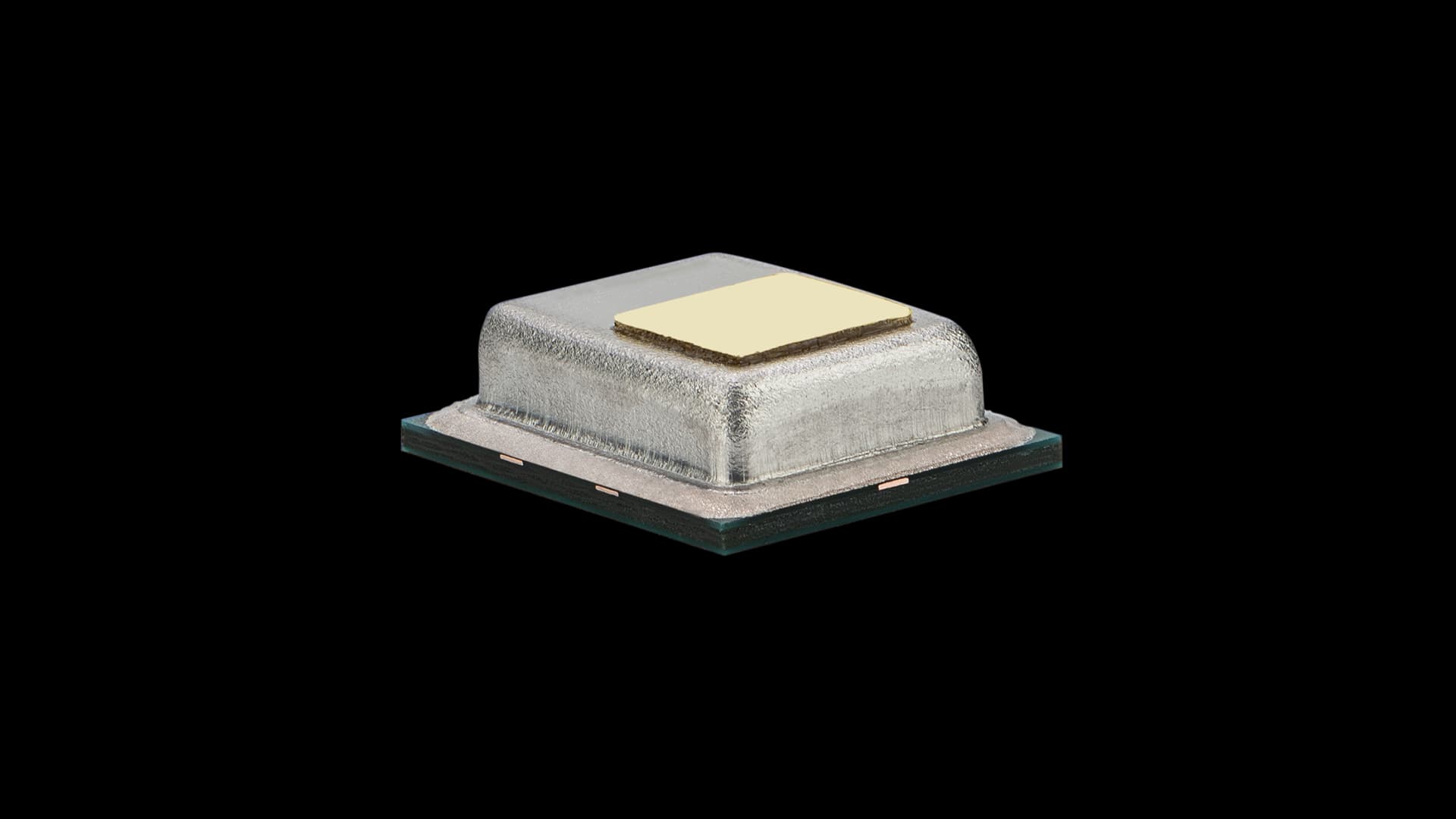
CO₂ sensor with unmatched form factor for indoor air quality applications
STCC4 offers one of the smallest form factors on the market for direct measurement of CO2, unlocking new applications previously limited by size and cost constraints. Designed for seamless integration into compact electronic devices, the sensor is a groundbreaking newcomer in the CO2 sensor market.
Utilizing the latest technological advancements in thermal conductivity sensing, the fully factory calibrated STCC4 provides the accuracy needed for indoor air quality applications at a low current consumption. Both accurate signal compensation and monitoring of relevant indoor environmental parameters are achieved when STCC4 is combined with our industry-leading temperature and humidity sensors. Optimized for high volume assembly through its SMD design and tape & reel packaging, it is suitable for a wide range of applications, including indoor air quality monitors, smart thermostats, air conditioners and much more.

Free Webinar: our experts explain, how we support restorative sleep
We had a great time hosting our recent webinar on the impact of indoor air quality on sleep, featuring our guest Prof. Pawel Wargocki, Professor of Indoor Environment and Energy (Technical University of Denmark) and our colleagues Joas van Iperen and Weiye Li.
The session explored how elevated CO₂ levels and insufficient ventilation can affect sleep quality, recovery, and overall performance, and why continuous CO₂ monitoring is becoming increasingly important in residential environments.
Missed the live session or want to revisit the insights?
No problem — the recording is now available.