Increase safety of electric vehicles
Global efforts to decarbonize the transport sector are driving one of the largest current transitions in the automotive industry: the shift from combustion engine powered cars towards electric vehicles (EVs), including battery electric vehicles (BEVs) and plug-in hybrid electric vehicles (PHEVs)—summarized with the term xEVs. The energy transition creates new requirements on the design of cars, especially concerning safety.
Thermal runaway detection
Most BEVs and PHEVs today rely on lithium-ion batteries. A failure in a single battery cell (among hundreds of cells in a typical battery pack), mechanical damage or thermal or electrical misuse can trigger a thermal runaway of the cell, an exothermic process heating the cell to over 1000°C. During this event, the cell releases significant amounts of toxic and flammable gases rapidly. This can cause a chain reaction (thermal propagation) where neighboring cells also overheat and enter thermal runaway, which eventually leads to the vehicle burning down. To protect occupants, international regulations like ECE R100, Rev. 3 and GB 38031-2020 mandate early detection of such events as well as a timely warning to ensure safe evacuation. Meeting present and future requirements demands highly responsive, long-term stable and reliable sensor technology to detect a thermal runaway.
Reliable thermal runaway sensing is crucial to initiate countermeasures
Once a thermal runaway is detected, the battery management system (BMS) triggers countermeasures to stop or at least slow down the thermal propagation by, for example, turning on battery cooling to the maximum. Furthermore, the BMS can trigger actions to warn and protect occupants and bystanders. Because the potential damage of an xEV burning down is huge (especially when parked in a garage) and false alarms may cause significant insecurity for users, the thermal runaway detection sensor must work fast and reliably. Measuring hydrogen has proven to be the most robust and reliable solution. With an operating time of 24/7 for over 10 years, the demand for long-term stability is also significant. Sensirion’s thermal runaway detection sensor defines a state of the art based on H2-sensing. The start of production of our latest thermal runaway detection sensor happened in late 2025.
Need for reliable thermal runaway sensing strongly increases with surging xEV sales With a strongly growing xEV market, it is expected that the absolute number of burning xEVs in the field is also growing, which in turn increases public awareness. OEMs are therefore expected to invest more into the safety of xEVs, namely also in thermal runaway detection. Sensirion feels very well positioned to take a significant share of this market in the future.
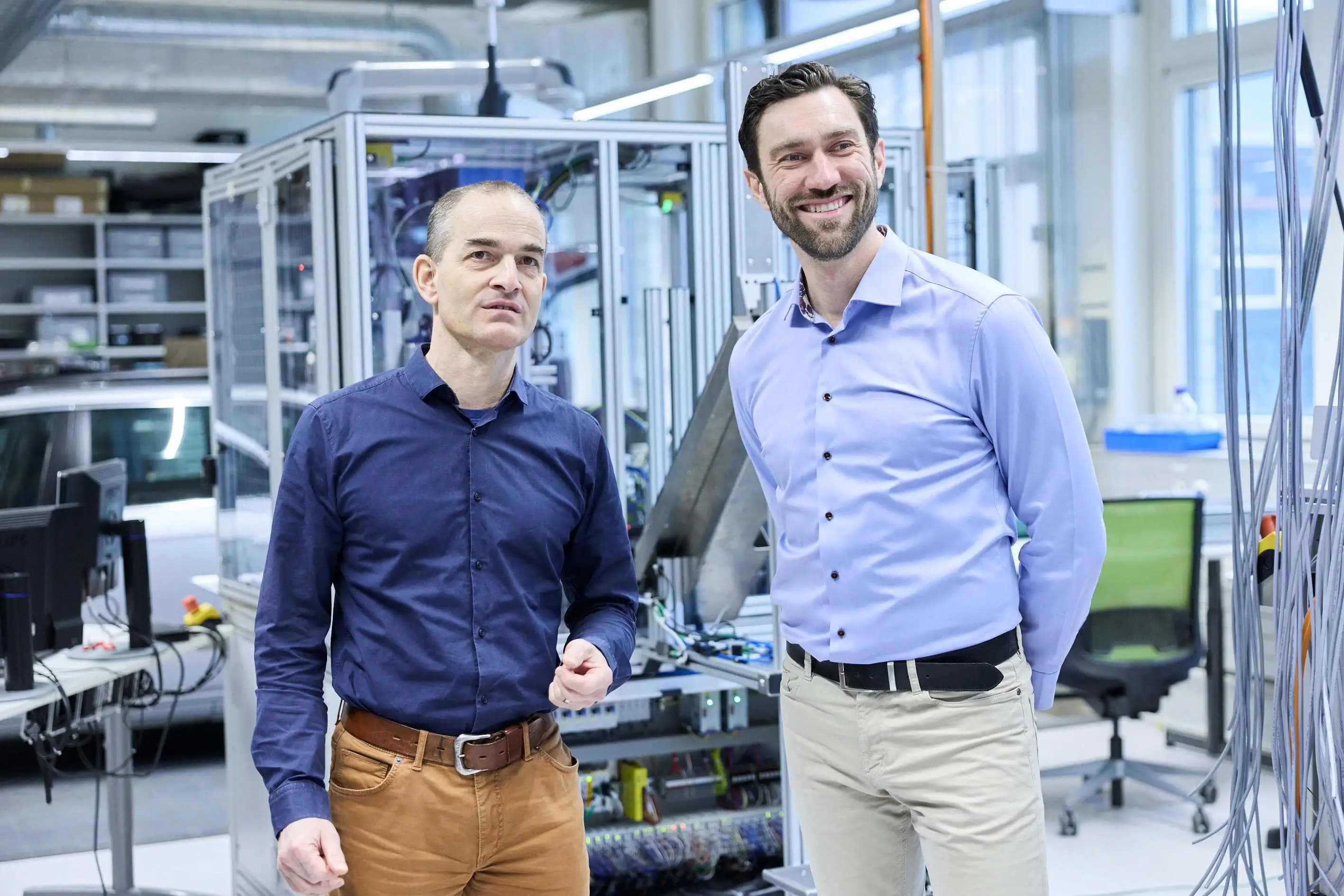
We introduce Igor Stier and Pascal Ferrat, as team members of Sensirion Automotive Solutions’s experts for thermal runaway detection sensors. Together with Marc Bächlin and Michael Rabe from R&D, they form the core team that develops thermal runaway detection sensors at Sensirion.
Igor works as Senior Key Account Manager and manages as well as extends Sensirion’s network at customers. He ensures professional and customer-centric communication to the customer. Pascal works as Strategics Business Development Manager and is the enabler of new applications and products with customers. He negotiates requirements and specifications with the customer as well as internal stakeholders.
With electrification, the automotive industry is undergoing a major transition. How is Sensirion contributing to this?
Igor: Our sensor offers an ideal way for carmakers to detect thermal runaway early and stop it from spreading, helping to make electric vehicles safer on the road and supporting their broader adoption as climate-friendly mobility solutions.
Pascal: Already today, OEMs use thermal runaway detection solutions based on various sensor technologies that contribute to the safety of xEVs. I am convinced that our sensor solution will strongly outperform the existing solutions in terms of reliability and fail-safeness even more in the future than it already does today.
Thermal runaway detection is a new application for Sensirion. How does such a development project come about?
Pascal: We do active and intensive market research, and our R&D department conducts its own research and/ or participates in research projects with universities. We discuss our research and ideas with target customers. Possible solutions are often based on Sensirion's broad smart gas sensing technology portfolio.
Igor: This approach helps us better understand our customers’ challenges and needs early on and offer an initial solution. That often leads to a joint development project. In the end, the success to any project comes down to close cooperation with the customer.
How does the customer benefit in this project?
Pascal: Sensirion Automotive Solutions can rely on excellent sensor technology at Sensirion that has already proven itself on the market for several decades in various applications across different markets. The close collaboration with the customer on one side and Sensirion’s technology experts on the other enables us to get the best out of our technology and design it into our sensor solutions.
Igor: The customer also benefits from our application expertise. We are solution experts and take on complex challenges. Our customers appreciate our fast, trustworthy, competent and solution-oriented approach to responding to their needs.
How does teamwork look like during the development of the thermal runaway sensor?
Pascal: The core team of this project consists of a project leader coordinating all project activities, a key account manager focusing on customer communication, a product manager negotiating specifications with the customer and internal stakeholders, a lead engineer and technical expert with focus on product design, a purchasing project leader handling the suppliers, a quality and a production manager focusing on their respective professions. Our close collaboration within the team and our solution-oriented focus enable us to provide the best possible solution to our customers.
Igor: The team works together seamlessly, usually side-by-side. We trust and support one another, and even when the challenges are big, we tackle them with the right mindset. That’s how we manage to develop the right solutions for our customers.
Any final thoughts?
Igor: I am proud that we were able to deliver a perfect solution in such a short time with this team. Thermal runaway sensing was completely new territory for us, yet we managed to establish a new technology with a new partner in an application that was new to us. Today, we have grown into a trusted and reliable solution provider.
Pascal: A big “thank you” goes to the entire project team. Without their dedication and effort, this success would not have been possible.
Read our 2025 Annual Report
- Download
- 03/2026
- 7.5 MB