Thermal flow measurement: High-flow sensor for laboratory analytics and industry
Autor: Patrick Reith, Product Manager
Sensirion erweitert die Möglichkeiten der thermischen Flüssigkeitsdurchflussmessung in der Laboranalytik und Industrie. Mit Hilfe eines neuen Designs ist es den Ingenieuren gelungen, einen High-Flow-Sensor mit bedeutend höheren Flussraten von bis zu 1 Liter pro Minute zu entwickeln. Damit dringt der Schweizer Hersteller in eine neue Dimension der akkuraten Durchflussmessung vor und baut sein Portfolio weiter aus.
Obwohl die Durchflussmessung höherer Flussraten mittels Coriolis-Massendurchflussmesser oder Ultraschall-Durchflussmesser sehr akkurat ist, eignet sie sich aus zwei Gründen für viele Anwendungen nicht: Die Technologie ist kostenintensiv und beansprucht viel Platz. Die kostengünstigen Turbinenradzähler, hingegen, sind für viele Anforderungen zu ungenau und liefern kein kalibriertes Ausgangssignal. Anwender klagen zudem über mangelnde Prozesssicherheit, da sich das Messrad im Strömungskanal verklemmen kann. Sensirion schliesst jetzt die Angebotslücke mit einem kosteneffektiven Durchflusssensor für die Laboranalytik und Industrie, der höhere Flussraten in gewohnter Sensirion-Qualität akkurat erfasst und dabei gerade einmal 7 g schwer und 5 cm lang ist.
Thermische Limitierung durch Stahlmembran überwunden
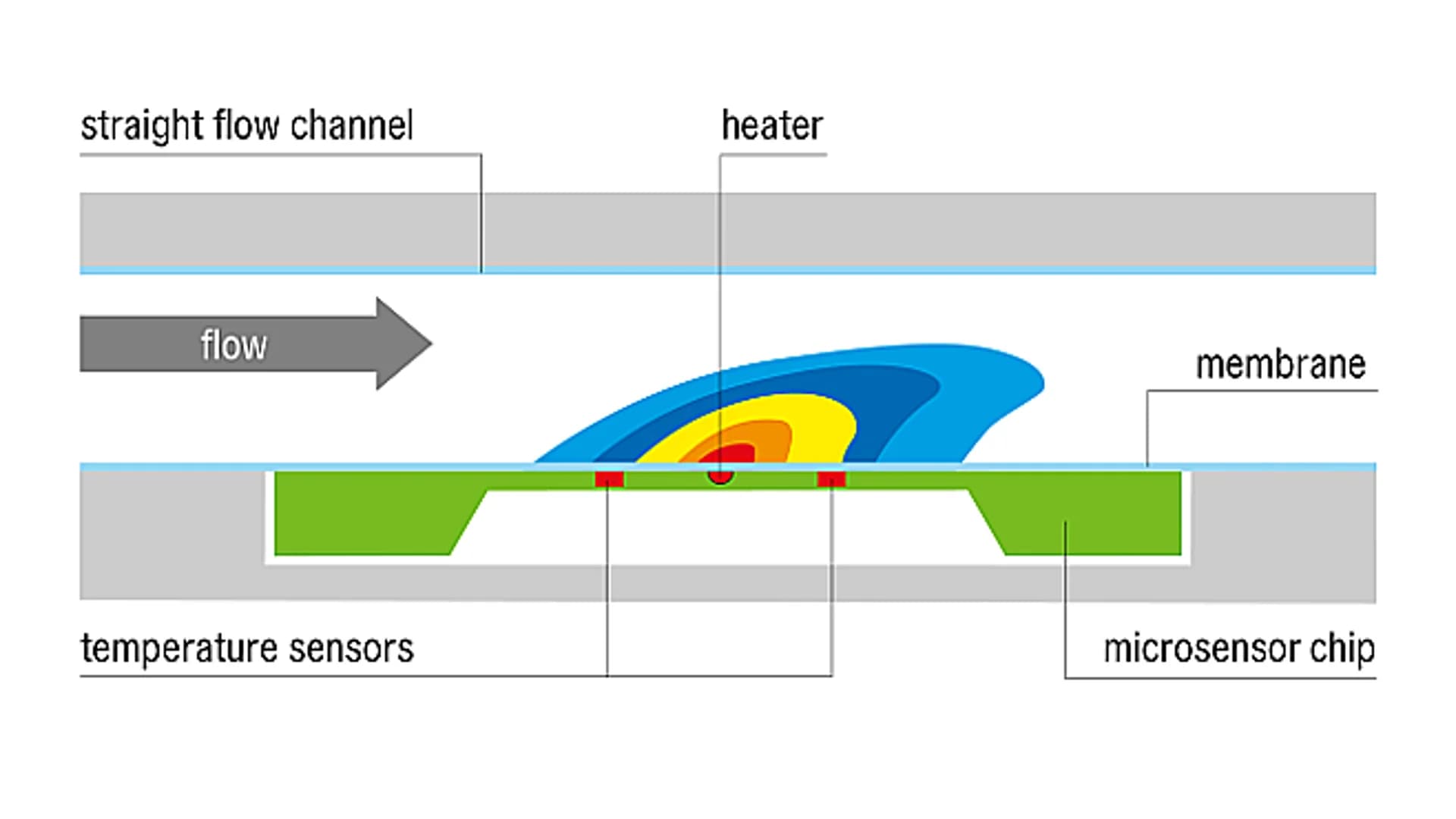
Dabei setzt das Unternehmen auf seine bewährte Funktionsweise: Ein mikroskopisch kleines Heizelement fügt dem Fluid eine winzige «Wärmewolke» zu, die durch den Durchfluss verformt wird. Zwei hochempfindliche Mikrosensoren messen die Temperatur vor und nach dem Heizelement und erfassen die Verformung der Wärmewolke, welche sich in einer Temperaturdifferenz zwischen den beiden Sensoren manifestiert. Dieser Wert wird durch den Mikrochip auf eine vollständig kalibrierte und linearisierte Flussrate umgerechnet und ausgegeben. Um die Strömung nicht zu stören und den Sensorchip vor Einflüssen durch Medien zu schützen, bringt Sensirion den Mikrosensorchip ausserhalb des Kanals an. Die Flussrate wird demnach «durch die Kanalwand hindurch» gemessen, was bedeutet, dass sowohl die Wärme des Heizers als auch die Signale beider Temperatursensoren die Membran durchqueren. Dadurch beeinflussen die thermischen Eigenschaften der Membran massgeblich die Sensorperformance.
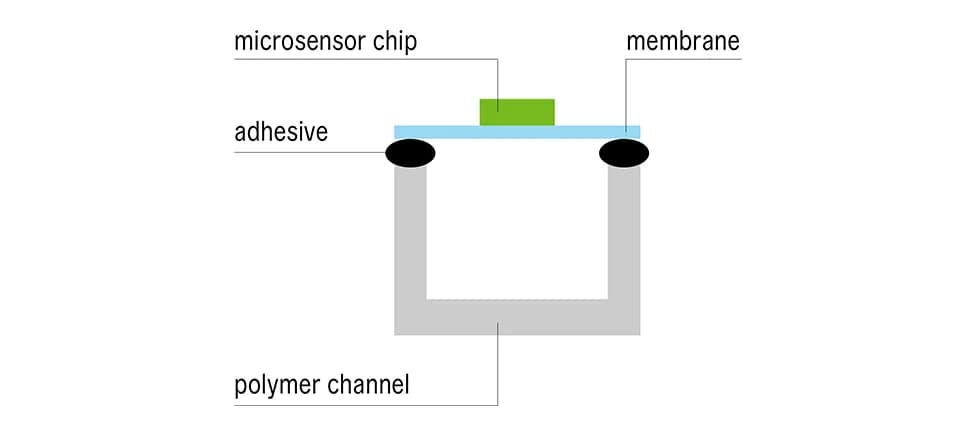
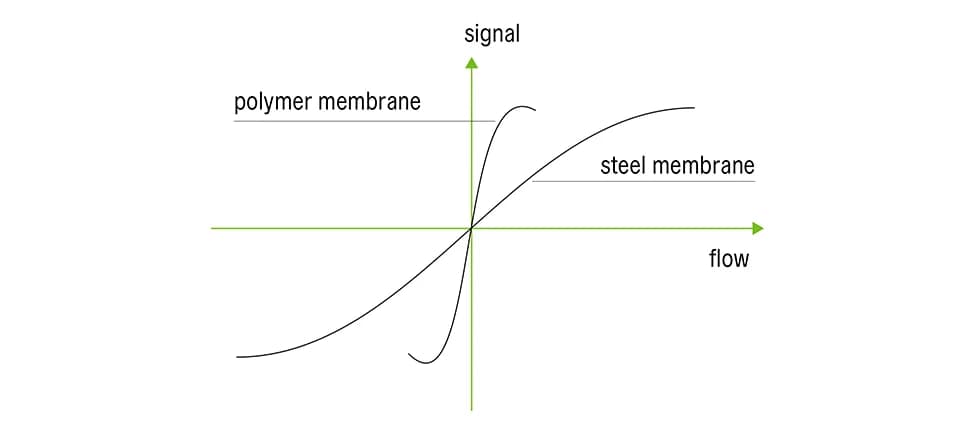
Beim Durchflusssensor LD20-2600B, ausgelegt für Flussraten bis zu 1000 ml/h, setzt Sensirion auf eine Polymermembran, deren Wärmeleitfähigkeit, Wärmekapazität und Wärmeübergangskoeffizient gering sind. Sollen jedoch höhere Flussraten gemessen werden, muss die Wärme effektiver in den Strömungkanal eingebracht werden. Aus diesem Grund hatten die Sensirion-Entwickler die SLF3x-Produktfamilie mit einer Stahlmembran ausgestattet. Diese sorgt beim SLF3S-1300F nicht nur für einen grösseren Messbereich – bis zu 65 ml/min, sondern darüber hinaus für einen breiteren Flussratenbereich (siehe Grafik), da die Kennlinie der Stahlmembran flacher verläuft als jene der Polymermembran. Das neuste Mitglied, der SLF3S-4000B, eröffnet nun dank einer zusätzlichen Optimierung der hydrodynamischen Eigenschaften völlig neue Dimensionen: Dieser High-Flow-Sensor befindet sich sogar in der Lage, Flussraten bis zu 1000 ml/min zu messen.
Hydrodynamische Limitierung durch W-förmigem Kanalquerschnitt überwunden
Voraussetzung für das thermische Messprinzip ist ein laminares Strömungsprofil. Das bedeutet, dass sich die einzelnen Fluidschichten im Durchfluss nicht miteinander vermischen. Denn verwirbelte Stromlinien, oder Turbulenzen, stören das Temperaturprofil und verfälschen das Sensorsignal. Ein diesbezüglich wichtiger Indikator ist die Reynoldszahl (Re), die das Strömungsmuster mittels vier Variablen beschreibt: Kanaldurchmesser, Strömungsgeschwindigkeit, Dichte und dynamische Viskosität des Fluids. Eine niedrigere Reynoldszahl (bis ca. 2300) führt zu einer laminaren und eine höhere (über ca. 3000) zu einer turbulenten Strömung. Grundsätzlich begünstigen geringe Strömungsgeschwindigkeiten laminare Strömungsprofile, während Instrumente wie Durchflussregler oder im Kanal angebrachte Sensoren Turbulenzen verursachen.
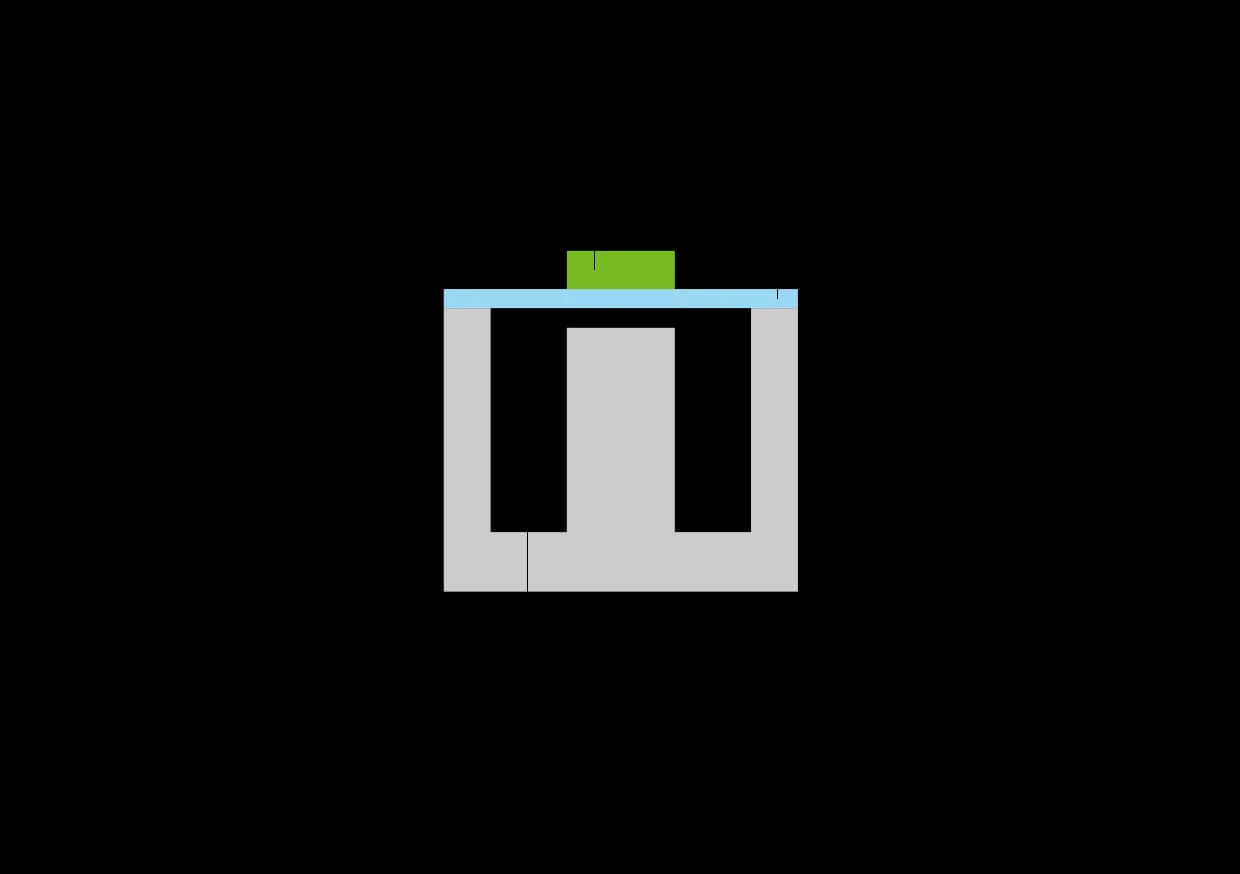
Um hohe Flussraten akkurat zu messen sind entweder höhere Strömungsgeschwindigkeiten oder grössere Kanalquerschnitte erforderlich. Doch beide Faktoren erhöhen die Reynoldszahl – und damit die Wahrscheinlichkeit von Turbulenzen. Um diese hydrodynamische Limitierung zu überwinden, haben sich die Sensirion-Ingenieure bei der Entwicklung des neuen High-Flow-Sensors eines konstruktiven Tricks bedient: Sie legten das neue Kanalprofil W-förmig aus. Dies schafft die Möglichkeit, den MEMS-Chip beim dünnen Nebenstrom (mit laminarer Strömung) zu positionieren, wo er seine Messperformance richtig ausspielen kann.
Physikalische Modellierung dämmt weiter Einflüsse ein
Während der Entwicklung des neuen High-Flow-Sensors haben die Sensirion-Entwickler festgestellt, dass sich bei den Sensoren mit W-Profil eine Reihe von Störeinflüssen stärker auf die Messgenauigkeit auswirken als bei den herkömmlichen Sensoren mit rundem Profil. So hat zum Beispiel die Fluidtemperatur einen grösseren Einfluss auf den Messwert, da diese nicht nur die thermischen, sondern auch die hydrodynamischen Eigenschaften verändert – mitunter, da die Wärmeleitfähigkeit des Fluids von der Temperatur abhängt. Zum Beispiel reduziert eine erhöhte Fluidtemperatur die Viskosität, die beim W-Profil (über die Reynoldszahl) einen grösseren Einfluss auf den Messwert hat.
Ein ideales Messumfeld zu schaffen, bleibt folglich auch nach Überwindung der thermischen und hydrodynamischen Limitierungen anspruchsvoll. Um bei der Berechnung von Flussraten weitere Einflüsse miteinzubeziehen, bedient sich Sensirion zusätzlich physikalischer Modelle, die in die hauseigene Kalibration einfliessen und sicherstellen, dass der Sensor unter allen Bedingungen zuverlässig und akkurat funktioniert.
Vollständiges Produktportfolio – ein One-Stop-Shop-Konzept
Mit dem neuen High-Flow Sensor SLF3S-4000B stösst Sensirion in eine neue Messdimension vor und deckt jetzt einen beträchtlich ausgedehnten Messbereich vom Nanoliter pro Minute bis zum Liter pro Minute ab. Mit gleichem «Look & Feel» wie die bestehenden drei Durchflussensoren der SLF3x-Familie bietet der SLF3S-4000B mehrere Vorteile: Anwender können bestehende Kabel oder Software ohne Anpassungen weiterhin zum Auslesen nutzen, wodurch eine Neuprogrammierung von Software entfällt. Vom vervollständigten Angebot an Durchflusssensoren profitieren Anwender, die ihre Sensortechnologie ausschliesslich bei einem Spezialisten für Automatisierungslösungen und Fluidsysteme beziehen möchten. Doch wir befinden uns erst am Anfang der Reise: Die Sensirion-Entwickler wollen die Messlatte noch weiter erhöhen und haben Flussraten bis zu 20 Liter pro Minute im Visier. Erste Feldstudien befinden sich bereits in Planung.