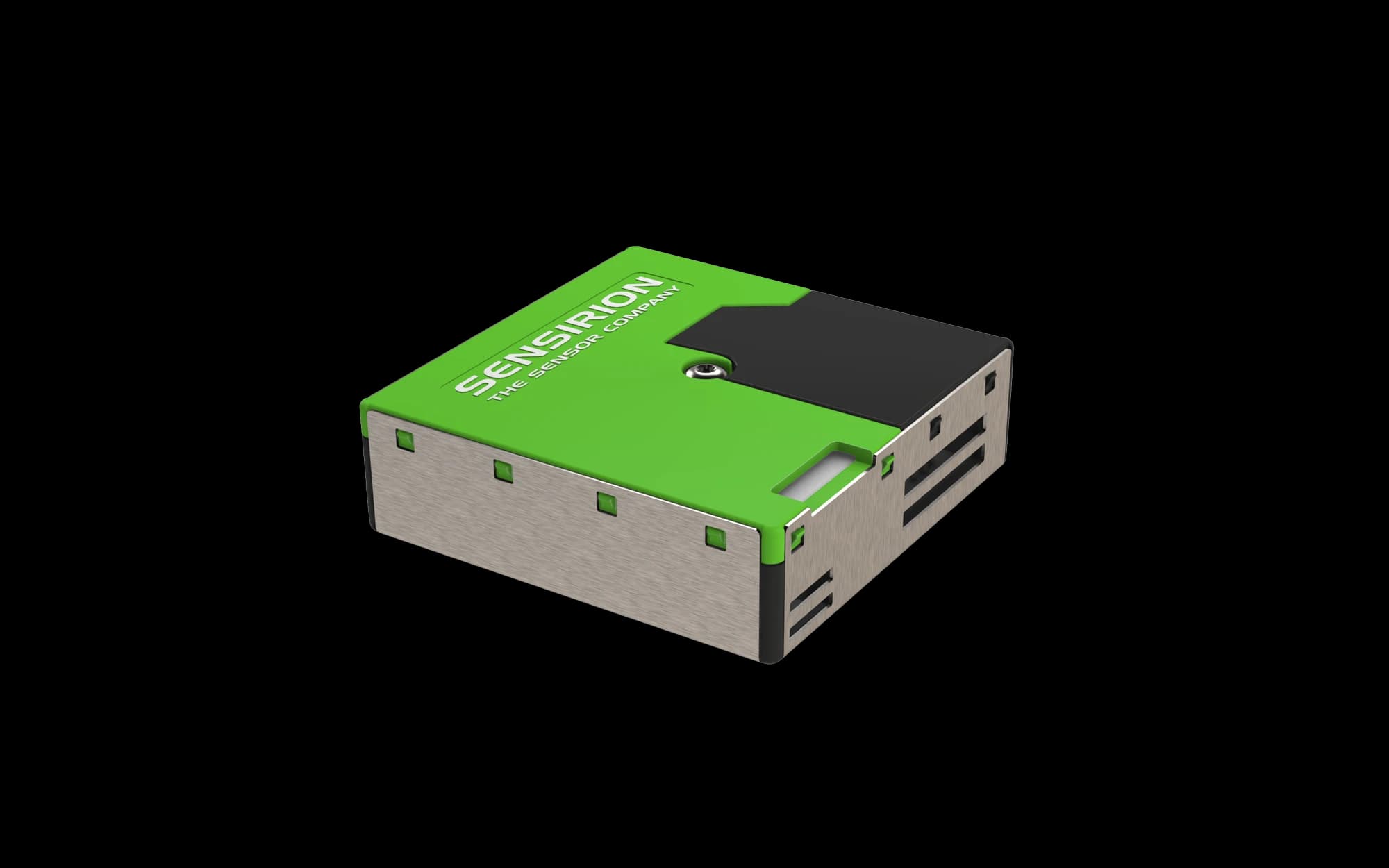
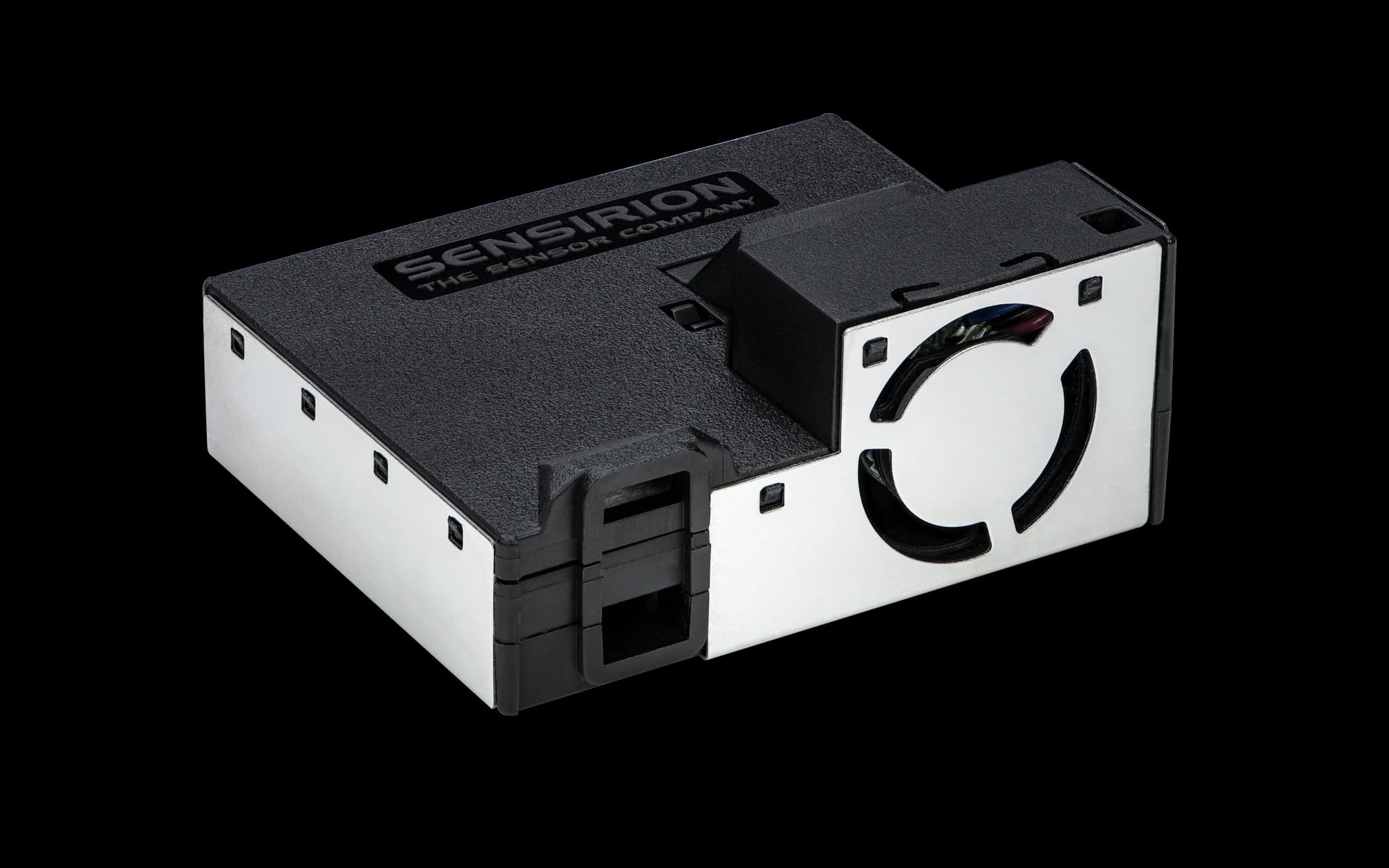
Feinstauberfassung zur Messung der Luftqualität
Autor: Livio Lattanzio, PhD Product Manager, Particulate Matter Sensors Sensirion
Feinstaub, abgekürzt "PM" für "Particulate Matter", ist ein Gemisch aus in der Luft schwebenden festen Partikeln und feinen Tröpfchen, das eingeatmet werden und ernsthafte Gesundheitsprobleme verursachen kann. Feinstaub enthält Partikel mit unterschiedlichen Eigenschaften in Bezug auf Form, Grösse und Zusammensetzung, er wird jedoch üblicherweise in Kategorien untergliedert, die sich auf die Partikelgrösse beziehen. Unterschiedliche Feinstaubklassen werden mit der gebräuchlichen Nomenklatur PMx angegeben, wobei "x" den maximalen Partikeldurchmesser im Partikel-Luft-Gemisch oder "Aerosol" definiert. PM2,5 beispielsweise bezeichnet inhalierbare Partikel mit einem Durchmesser von 2,5 Mikrometer und kleiner, PM10 definiert Partikel mit einem Durchmesser von 10 Mikrometer und kleiner etc. Die speziellen Feinstaubkategorien PM10 und PM2,5 wurden in der Vergangenheit von nationalen Regierungen als wichtige Messgrössen für die Qualität der von uns eingeatmeten Luft bestimmt , . Grössere Partikel bis 10um reizen vor allem die Schleimhäute, wie beispielsweise Augen und Rachenraum, wobei hingegen Partikel kleiner als 2,5um bis tief in die Lunge eindringen und Atemwegserkrankungen wie Bronchitis oder Asthma verursachen können. Kategorien wie PM1,0 und PM4,0 werden neuerdings von Geräten zur Überwachung der Luftqualität ebenfalls erfasst, um mehr Informationen zur Analyse der Partikelverunreinigung zu sammeln und die Entwicklung neuer gerätespezifischer Aktionen basierend auf dem erkannten Aerosoltyp (z. B. Hausstaub im Vergleich zu Rauch) zu ermöglichen.
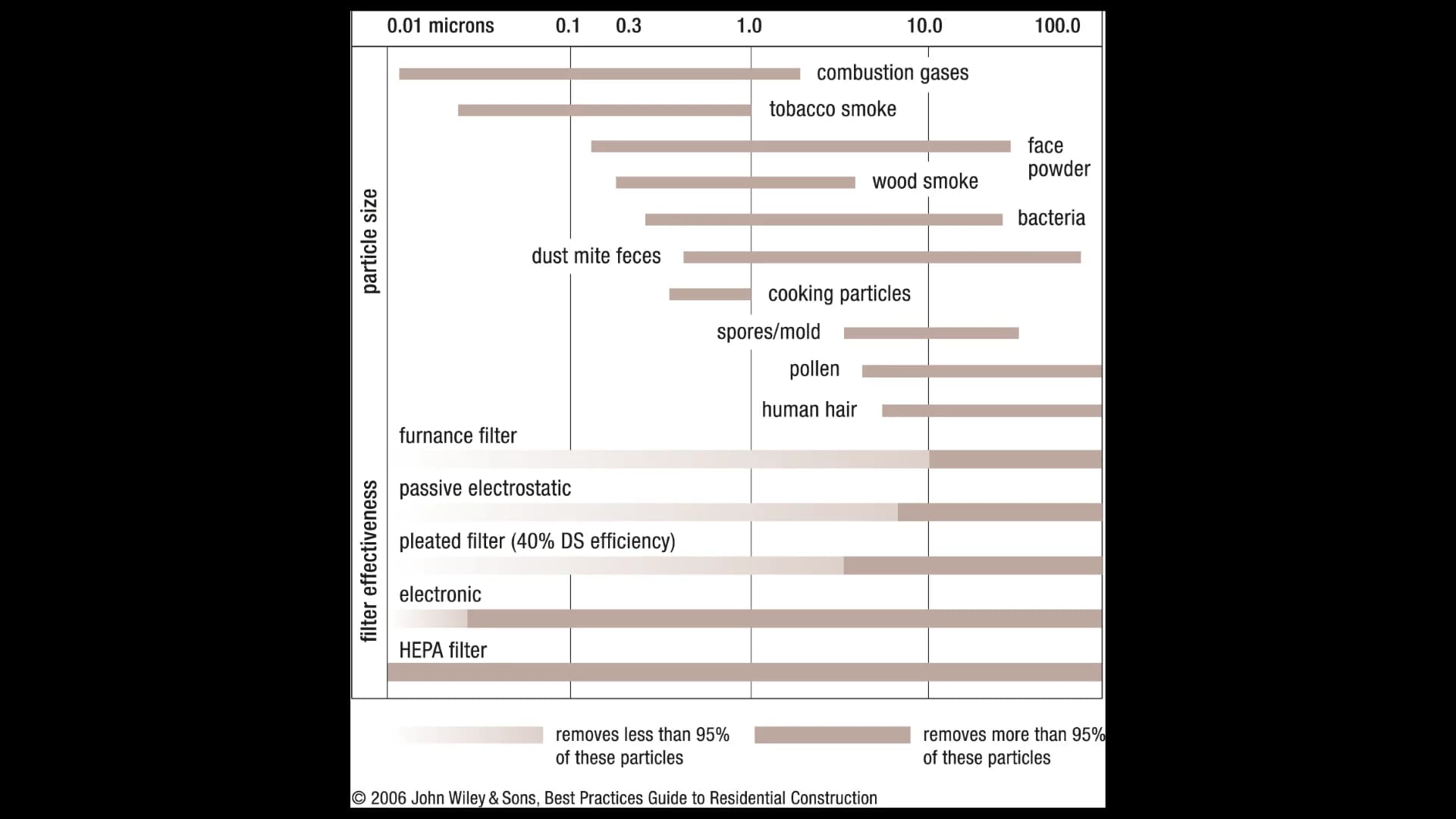
Die allgemeine Definition von Feinstaub schliesst Partikel ein, die nicht kleiner als 100 Nanometer sind. Partikel mit einer Grösse unterhalb 100nm werden hingegen als "ultrafeine Partikel" oder "UFP" bezeichnet und sind nicht Gegenstand dieses Artikels. Gemäss der oben genannten Feinstaubdefinition, die Partikel mit einer Grösse von 0,1 bis 10 Mikrometer einschliesst, verursachen die Partikel eine höhere Gesundheitsgefährdung, je geringer ihre Grösse ist und je tiefer sie in unser Atmungssystem eindringen und in den Blutkreislauf gelangen. Die Weltgesundheitsorganisation (WHO) stuft Feinstaub in der Luft als Karzinogen der Gruppe 1 und als das grösstes Umweltrisiko für die Gesundheit ein, das jährlich für einen von neun Todesfällen verantwortlich ist . Abb. 1 zeigt die Grössenordnungen häufiger Verunreinigungsquellen, inklusive der zur Entfernung solcher Verunreinigungen eingesetzter Filtertechnologien (adaptiert aus: John Wiley and Sons, Best Practices Guide to Residential Construction, 2006).
Üblicherweise werden Feinstaubwerte als "Massekonzentration" in μg/m3 gemessen. Der Hintergrund ist, dass das älteste und genaueste Verfahren zur Messung des Feinstaubs die gravimetrische Methode ist. Bei diesem Verfahren werden nach der Grösse vorsortierte Partikel über einen längeren Zeitraum (meist 24h) in einem Filter gesammelt und die Gewichtszunahme des Filters bestimmt. Die Massekonzentration wird anschliessend durch den Quotienten aus Massezuwachs und Gesamtluftvolumen bestimmt, welches innerhalb der Messzeit den Filter passiert hat. Der resultierende Wert wird in μg/m3 angegeben . Wenngleich gravimetrische Methoden seit langem als die genaueste Möglichkeit zur Bestimmung der Massekonzentration etabliert sind, unterliegen sie einigen praktischen Einschränkungen in Bezug auf ihre Verbreitung in alltäglichen Anwendungen: diese Instrumente sind gross, kostenintensiv und können lediglich eine Feinstaubklasse pro Messung verarbeiten (z. B. PM2,5). Echtzeit-Probenahmen sind nicht möglich und Anzahlkonzentrationen von Partikeln können nicht ausgeben werden.
Um eine besser geographische Abdeckung mit Messstationen zu erreichen und/oder um Feinstaubkonzentrationen in Echtzeit zu messen werden zunehmend optische Partikelzähler (Optical Particle Counter - OPC) zur Überwachung der Luftqualität eingesetzt. Diese Instrumente basieren Grossteils auf Streuung von Licht an den in der Luft schwebenden Feinstaubpartikel. In diesen Geräten werden Partikel gezielt durch den Strahl einer Lichtquelle (üblicherweise ein Laserstrahl) geführt und das dabei verursachte Streulicht von einer Fotodiode erfasst und ausgewertet. Gegenwärtig ist die optische Erkennung aufgrund ihrer einfachen Nutzbarkeit sowie eines unübertroffenen Preis-Leistungs-Verhältnisses die am weitesten verbreitete Technik. Während der vergangenen Jahre wurden OPCs kompakt genug, um sie in Klimaanlagen, Luftüberwachungs-Geräten sowie Luftreinigern zu integrieren, und sie zur Regulierung und Kontrolle der Luftqualität in Haushaltsgeräten, Autos sowie Aussenumgebungen einzusetzen.
Obwohl das Grundprinzip von OPCs in Bezug auf die Implementierung simpel erscheinen mag, unterscheiden sich diese in der Qualität der Messung stark. Abhängig von der Konstruktion dieser Geräte und der internen Datenverarbeitung, reagieren sie empfindlich auf Erkennungsfehler durch unterschiedliche optische Eigenschaften der Partikel (z. B. Form und Farbe) sowie unterschiedliche Massedichten. Die Qualität der Massebestimmung hängt daher stark von den Algorithmen des Herstellers zur Konvertierung des optischen Messsignals in die Massekonzentration des Feinstaubs ab. Darüber hinaus hat die interne Strömungsführung einen starken Einfluss auf die Langzeitstabilität des Sensors, da sich Partikel, bei einer schlechten Strömungsauslegung, an ihren optischen Komponenten (Laser, Fotodiode, Strahlfalle) absetzen können und damit die Messgenauigkeit im Laufe der Zeit verschlechtern.
Arbeitsprinzip
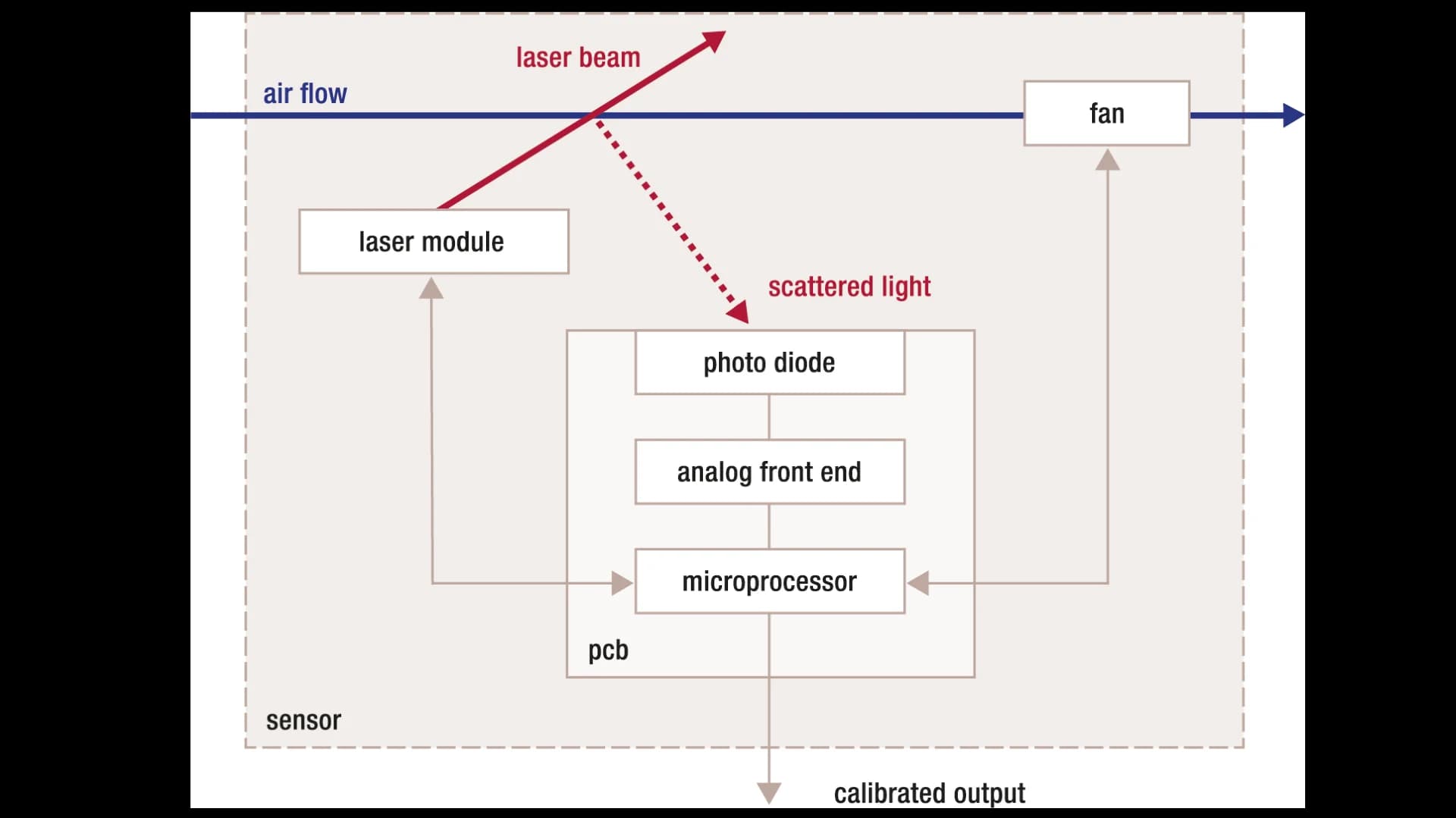
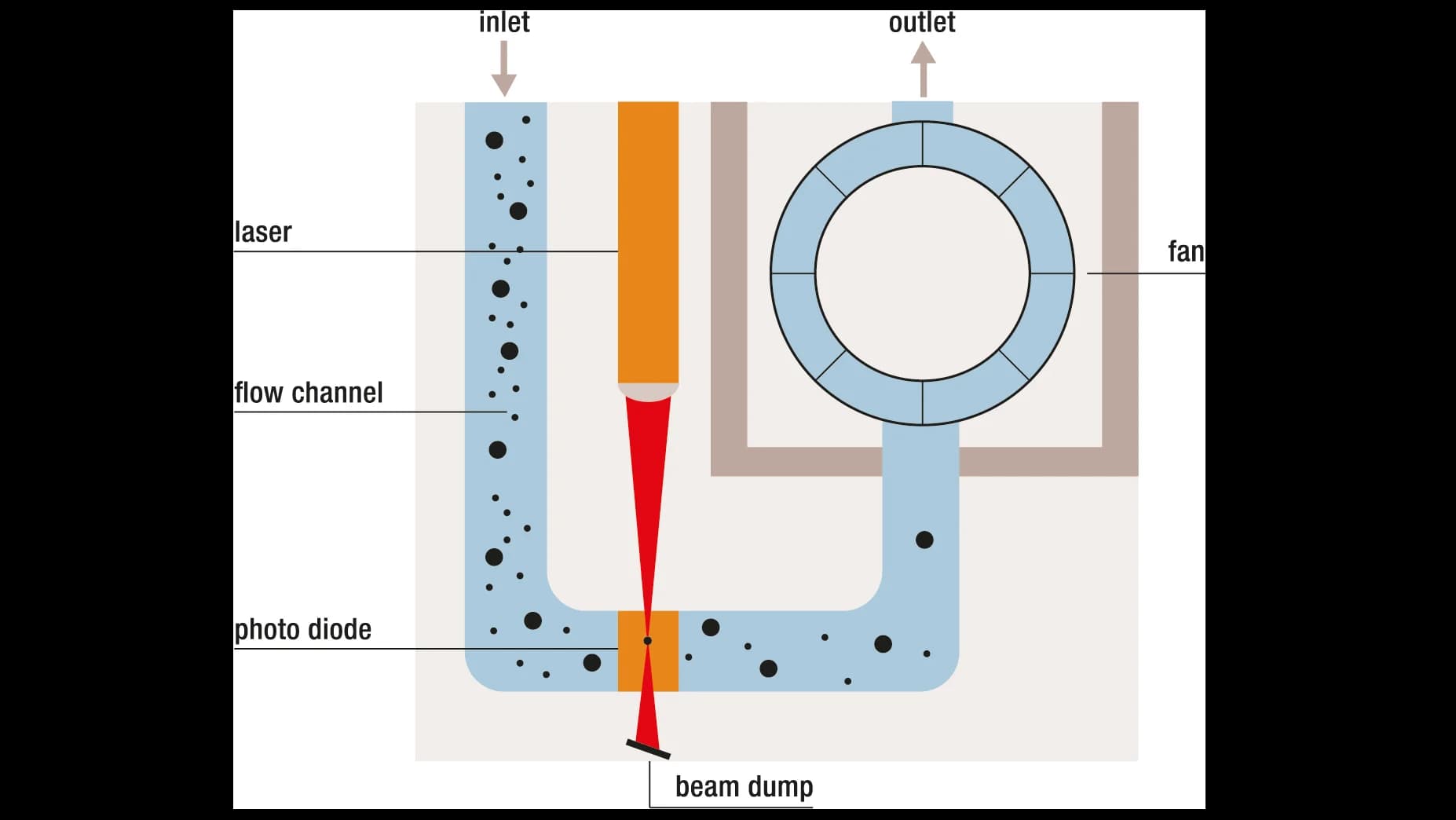
Das Arbeitsprinzip des Sensirion SPS30 basiert auf Laserstreuung. Im Inneren des Sensors wird mithilfe eines Ventilators ein geregelter, von der Temperatur unabhängiger Luftstrom erzeugt. Wie in Abb. 2 dargestellt, stabilisiert eine interne Regel-Schleife zwischen Mikroprozessor und Lüfter die Lüftergeschwindigkeit und somit den Luftstrom durch den Sensor. Feinstaub aus der Umgebungsluft wird durch den Luftstrom vom Einlass des Sensors bis zum Auslass getragen (schwarze Punkte in Abb. 3). In der Nähe der Fotodiode passieren die im Luftstrom enthaltenen Partikel einen fokussierten Laserstrahl, wie in Abb. 3 rot dargestellt, und streuen dabei das Laserlicht. Dieses Streulicht wird anschliessend von der Fotodiode in ein elektrisches Signal gewandelt und auf dem internen Mikrokontroller des SPS30 durch die proprietären Sensirion-Algorithmen in einen Ausgabewert für die Masse- und Anzahlkonzentration konvertiert.
Erkennung der Partikelzusammensetzung
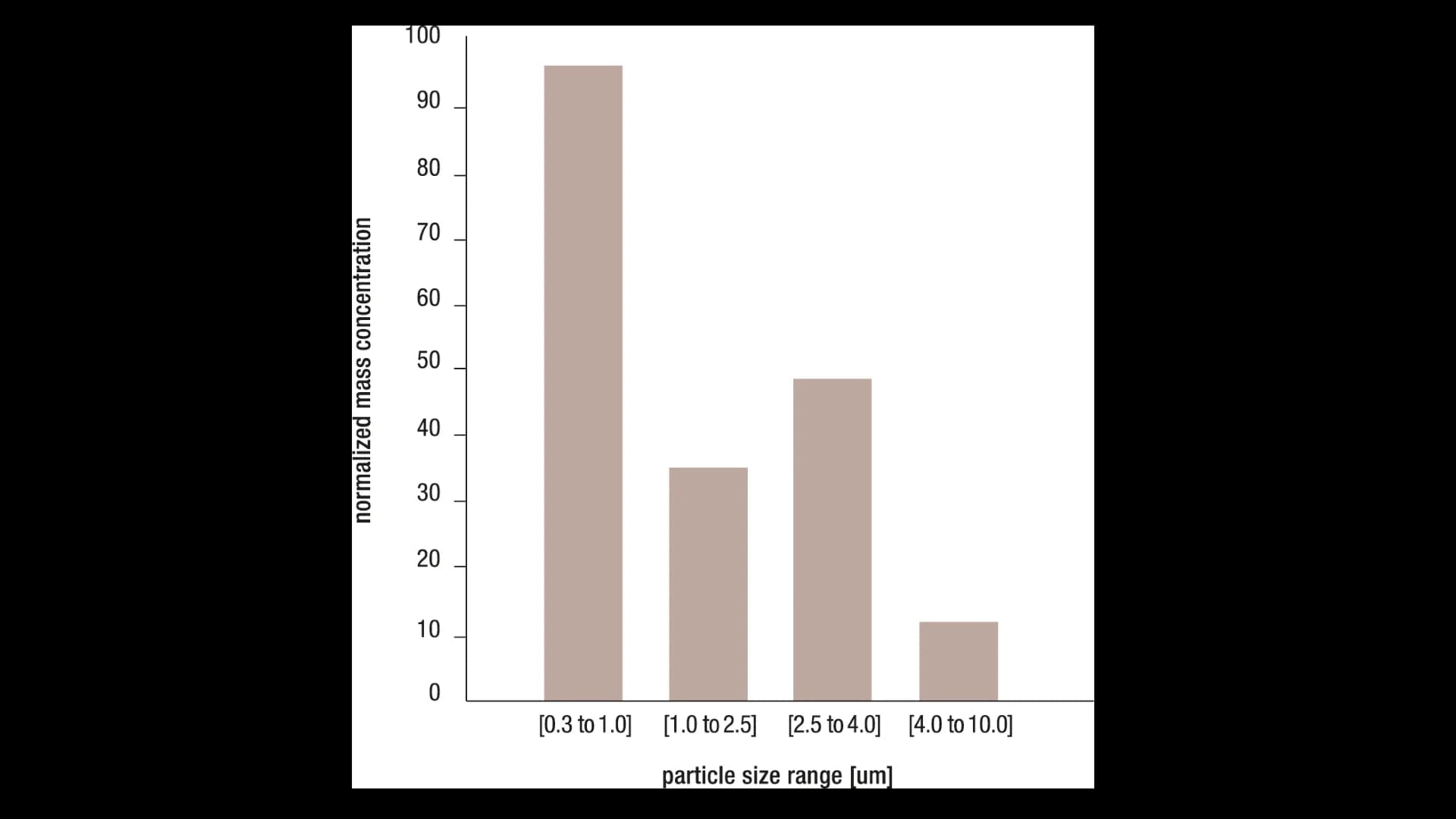
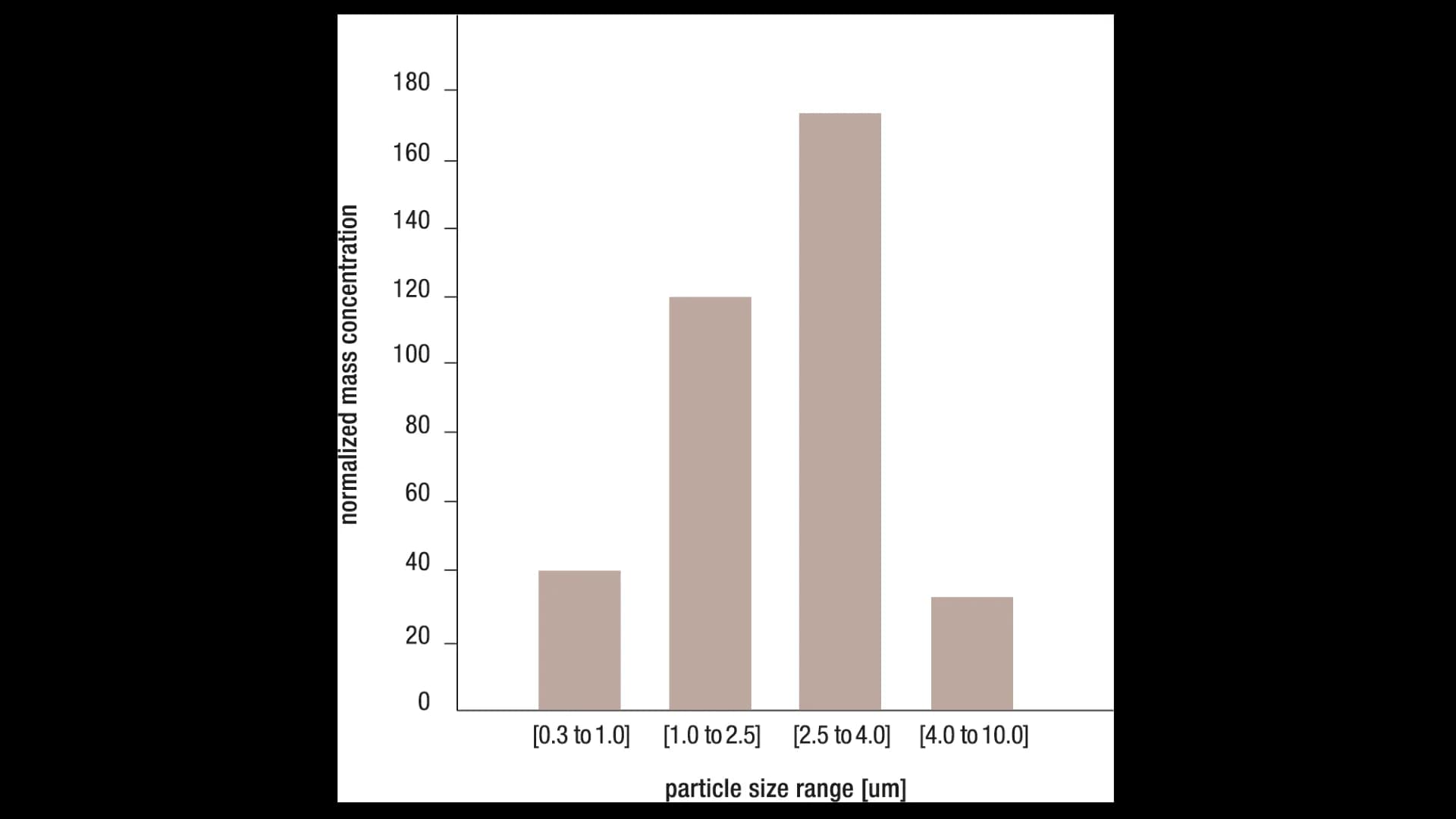
Wie oben erwähnt, stellen die Herstelleralgorithmen in Verbindung mit einem korrekten elektronischen Frontend-Design einen grundlegenden Unterschied bei der Erkennung der Massekonzentration aus dem erfassten Streulicht dar. Viele Feinstaubsensoren im Niedrigpreissegment setzen bei der Kalibrierung eine konstante Massedichte voraus und berechnen die Massekonzentration durch Multiplikation der erfassten Partikelanzahl mit der Massedichte. Diese Voraussetzung ist jedoch nur erfüllt, wenn der Sensor lediglich einen einzigen Partikeltyp misst (zum Beispiel Tabakrauch), in der Alltagsrealität jedoch finden sich zahlreiche verschiedene Partikeltypen mit vielen unterschiedlichen optischen Eigenschaften, vom "schweren" Haus- und Strassenstaub bis hin zu "leichten" Verbrennungspartikeln (siehe Abb. 4). Die proprietären Algorithmen von Sensirion nutzen ein neues Konzept, das unabhängig vom Partikeltyp eine Bestimmung der Grössenklassen zulässt und damit die Messung der Massekonzentration deutlich verbessert. Zusätzlich kann man, im Gegensatz zu den meisten modernen Endverbraucher-Feinstaubsensoren auf dem Markt, eine zusätzliche Klasse ausgegeben - PM4,0. Dies ermöglicht eine höhere Genauigkeit bei der Unterscheidung von Aerosolen und ermöglicht neue Anwendungen basierend auf der Erkennung der Partikelzusammensetzung. Abb. 5 zeigt eine Praxisdemonstration dieser Funktion unter Verwendung der ControlCenter-Software von Sensirion. Die Balkendiagramme zeigen die in Echtzeit mit einem SPS30 gemessenen Massekonzentrationsklassen. Das linke Diagramm zeigt eine Live-Messung von Streichholzrauch, der deutlich mehr kleinere Partikeln enthält. Das rechte Diagramm zeigt eine Messung von Strassen-Staub, der deutlich mehr grosse Partikel enthält. Dieses einfache Experiment verdeutlicht anschaulich den Mehrwert der Grössenklassenerkennung des SPS30 sowie das Potenzial für die Entwicklung neuer Anwendungen, die auf der Erkennung der Partikelzusammensetzung basieren.
Widerstandsfähigkeit gegen Staub
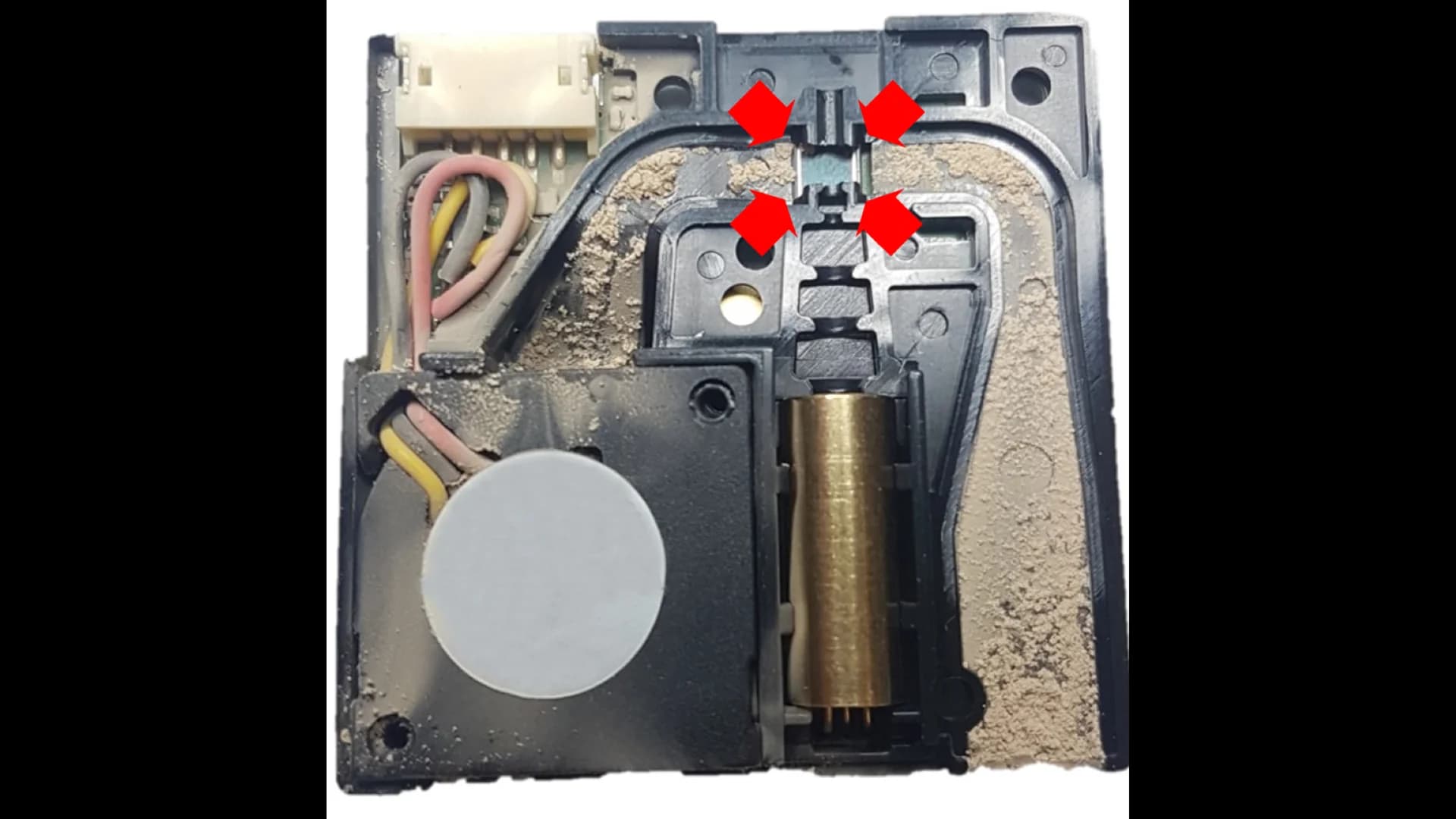
Wie bereits erwähnt, beeinflussen Staubablagerungen oder Verschmutzungen der wichtigen optischen Komponenten des PM-Sensors die Qualität der Messwerte deutlich. Basierend auf mehr als 20 Jahren Erfahrung in der Konstruktion von Strömungssensoren für zahlreiche anspruchsvolle Märkte und Anwendungsbereiche (z. B. Automobilindustrie, Medizin, Industrie und intelligentes Energiemanagement) haben die Ingenieure von Sensirion eine innovative und proprietäre Strömungsführungs-Technologie entwickelt und in den SPS30 integriert. Mit deren Hilfe werden Staub- und Schmutzablagerungen an den optischen Komponenten vermieden und eine Langzeitstabilität ermöglicht. Abb. 6 zeigt den Flusskanal des SPS30 nach einer starken Staubbelastung, welche 5 Jahren Dauerbetrieb in Peking simuliert. Man sieht, dass durch das Strömungsdesign alle optischen Komponenten des Sensors (Photodiode, Laser, Blenden, Strahlfalle) nach dem Stresstest vollständig sauber bleiben.
Zusammenfassung
Zusammenfassend bieten die Staubresistenz und die fortschrittlichen Klassifizierungstechnologien von Sensirion einen Mehrwert für Anwendungen in zahlreichen Branchen, unter anderem bei der Überwachung der Luftqualität, in Luftreinigern sowie Klimaanlagen. Speziell wenn die Luftqualität für den Endanwender im Vordergrund steht, ist es wichtig, dass der Sensor während der gesamten Lebensdauer eines Gerätes zuverlässige Messergebnisse liefert. Das steigert neben der Energieeffizienz dieser Geräte vor allem die Kundenzufriedenheit und ermöglicht einen nachhaltigen Betrieb. Zusätzlich kann die genauere Partikelgrösseneinteilung Massnahmen basierend auf der erkannten Partikelzusammensetzung verbessern, wie zum Beispiel den Tausch bestimmter Filter bei mehrstufigen Filtersystemen oder gezielte Interventionen des Endverbrauchers.