Flusssensorlösungen in modernen Beatmungsgeräten
Autor: Andreas Alt, Sales Director Medical
Kontinuierliche Atemluftflussmessungen während der Anästhesieüberwachung, intensivmedizinischen Behandlung und in anderen klinischen oder ambulanten Umgebungen stellen wichtige Informationen für die Einschätzung der kardiorespiratorischen und Atemkreislauffunktion zur Verfügung und sind aus der modernen Medizin nicht mehr wegzudenken. 90 Jahre nach dem ersten Einsatz der Eisernen Lunge haben maschinelle Beatmungsverfahren, die mittels maschinellen "Luftpumpen" den Patienten mit Atemgas versorgen, Einzug gehalten. Bei diesen Überdruckbeatmungsverfahren wird mithilfe von positivem Druck Luft in die Patientenlunge geführt. In diese Beatmungsgeräte wurden zunehmend intelligente Funktionen integriert, die dem Beatmungsgerät erlauben, sich automatisch den Veränderungen der Lungenmechanik bzw. der Patientenatmung anzupassen. Moderne druck- oder volumenorientierte Beatmung ist damit heutzutage patientenorientierter als früher. Da aufgrund der geräteseitigen Intelligenz immer weniger Beatmungsverfahren benötigt werden, hat sich gleichzeitig auch die Beatmung vereinfacht. Wurde beispielsweise früher die Spontanatmung bei invasiv beatmeten Patienten zur Erleichterung der mechanischen Beatmung durch Sedierung und Muskelrelaxation unterdrückt, kennt man heutzutage die Vorteile der Spontanatmung und versucht diese über einen möglichst langen Zeitraum aufrechtzuerhalten.
Beatmungstherapien
Nichtinvasive Beatmung beschreibt Beatmungstherapien, die nichtinvasiv zum Beispiel mittels Masken oder Nasenbrille ausgeführt werden. Oft spricht man deshalb in diesem Zusammenhang von Maskenbeatmung oder NIV bzw. NPPV (Non-Invasive Ventilation bzw. Non-Invasive Positive Pressure Ventilation). Bei der invasiven Beatmung wird ein endotrachealer Tubus oder eine tracheale Kanüle in die Luftröhre des Patienten geführt, um die Lunge mit Atemluft zu versorgen. Beide Beatmungsarten - nichtinvasiv und invasiv - haben ihre Berechtigung und werden oft komplementär eingesetzt. Die nichtinvasive Beatmung wird vor der Intubation oder nach der Extubation im klinischen Umfeld eingesetzt. Eine weitere klassische Anwendung der NIV-Therapie ist die häusliche Pflege, bei der sie Patienten Beatmungsunterstützung bietet. Dabei unterscheidet man zwischen hoch entwickelten Beatmungsgeräten für die Intensivpflege mit einer nichtinvasiven Beatmungsoption und weniger komplexen nichtinvasiven Beatmungsgeräten für den Einsatz im subakuten Bereich und in der häuslichen Pflege.
Einsatz von Befeuchtungsgeräten
Ein nicht zu unterschätzender Faktor, der weit über den blossen Patientenkomfort hinausgeht, ist die Befeuchtung der inhalierten Luft. Obwohl die nichtinvasive Beatmung die oberen Atemwege nicht umgeht und die Befeuchtung der inhalierten Luft teilweise noch auf natürliche Weise stattfindet, kommt es häufig zur Verwendung eines Befeuchtungssystems, insbesondere bei Patienten, die durch den Mund atmen. Gut befeuchtete und angewärmte Luft trägt wesentlich zum Erfolg der Beatmungstherapie bei, da sie sowohl die Sekretableitung als auch die Toleranz der nichtinvasiven Beatmungstherapie verbessert.
Beatmungstherapie – Trends
Aktuelle Trends in Krankenhäusern zeigen, dass die nichtinvasive Beatmung heute häufiger und für weitaus mehr Krankheitsbilder eingesetzt wird als je zuvor. Patienten mit chronisch obstruktiven Lungenerkrankungen stellen dabei einen grossen Anteil der Patientenpopulation dar, die mit nichtinvasiver Beatmung auf Intensivstationen behandelt werden. Im Fall von akutem Lungenversagen wird zum Beispiel auf Intensivstationen immer häufiger nichtinvasive Beatmung als First-Line-Therapie eingesetzt, was zu einer Verminderung infektiöser Komplikationen führt, die Entwöhnungszeit und die Verweildauer auf der Intensivstation verkürzt, die Intubationsrate reduziert und mit Kostensenkungen einhergeht. Aber auch im Heimbereich nimmt der Einsatzder nichtinvasiven Langzeitbeatmung aufgrund von Lungenkrankheiten wie COPD, Lungenfibrosen oder Cystischer Fibrose zu.
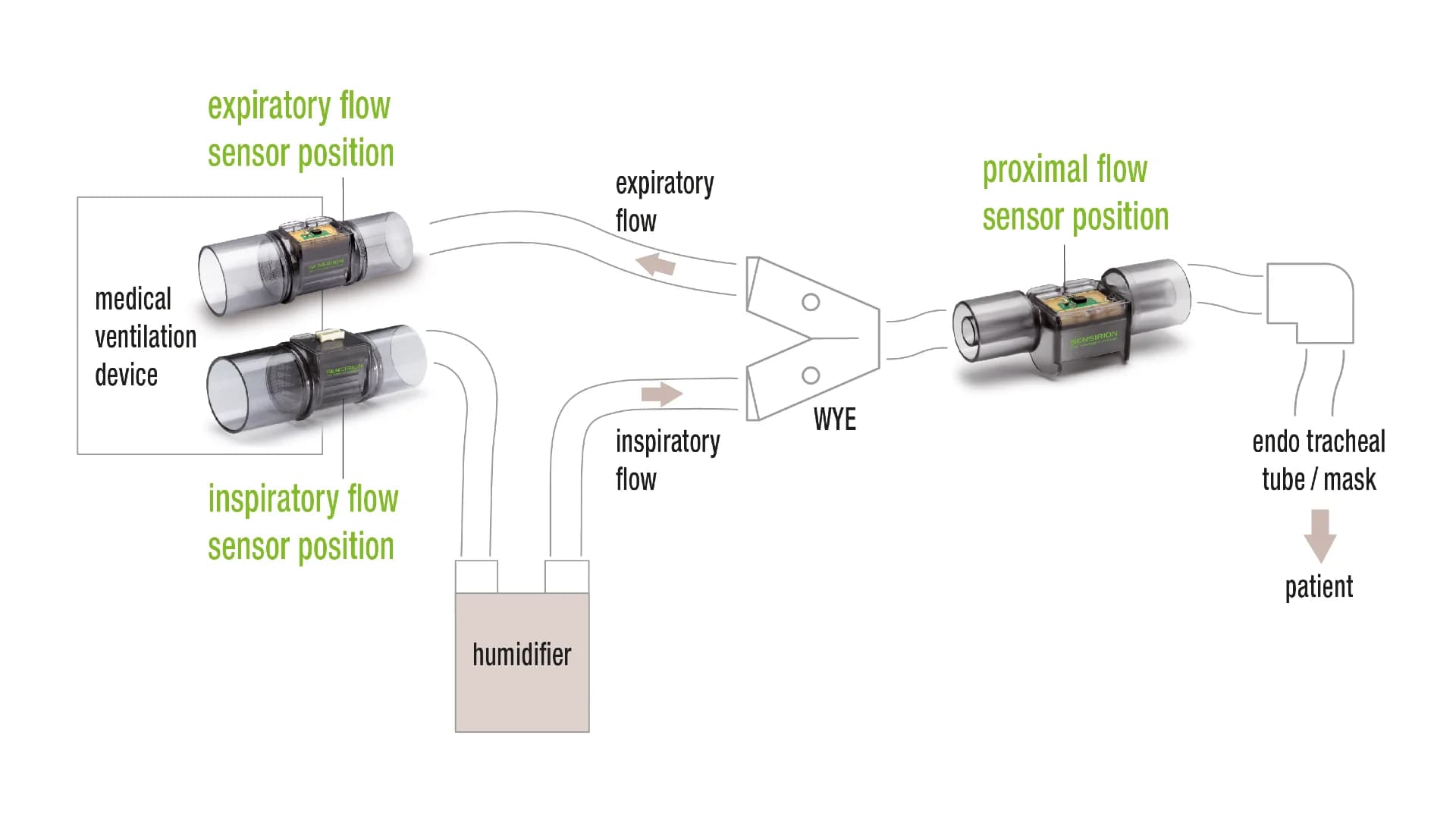
Dreh- und Angelpunkt aller Beatmungsgeräte ist die genaue Messung der Atemgasflussrate und des Atemgasvolumens, das in den Patienten hinein- und wieder aus ihm herausfliesst. Erst diese Messungen mit höchster Empfindlichkeit und hoher Genauigkeit ermöglichen die heute übliche, eingangs erwähnte patientenorientierte Beatmung, die auch die Pathophysiologie des Patienten besser widerspiegelt. So erlaubenbeispielsweise die Überwachung von Druck-, Massenfluss- und Volumenwerten über die Zeit, Veränderungen im Zustand des Patienten zu beobachten, zum Beispiel eine verringerte Lungenkapazität. Der schematische Aufbaueines Beatmungsgerätes mit den typischen Luftfluss-/Sensorpositionen ist in Abbildung 1 dargestellt.
Technische Herausforderungen
Die komplexen Beatmungskreisläufe befinden sich durch die individuell eingesetzten Schläuche,Befeuchtungsgeräte, Filter und Adapterstücke in unterschiedlichsten Zusammensetzungen. Dadurch kann esimmer wieder zu Leckagen kommen, weshalb die inspiratorisch gemessene Flussrate (I) teils stark von derFlussrate, die den Patienten tatsächlich erreicht, abweicht. Gleiches gilt für die exspiratorisch gemesseneFlussrate (E). Die Luftflussmessungen werden zudem durch die ständigen Veränderungen der Lufttemperatur,Feuchtigkeit und Atemgaszusammensetzung sowie durch die Kontamination der Schläuche und derexspiratorischen/proximalen Sensoren durch Auswürfe, Pathogene und Blut erschwert. Aufgrund technischerLimitierungen wurden die Messungen der inspiratorischen (I) und exspiratorischen Flussraten (E) in derVergangenheit im Beatmungsgerät durchgeführt. Die teils grob unterschiedlichen Flusswerte zu den eigentlichbeatmeten Werten wurden soweit möglich durch aufwendige und mit Ungenauigkeiten behafteteKompensationen korrigiert. Um dieser technischen Herausforderung entgegenzuwirken, wird heute der Atemflussmöglichst nahe beim Patienten, also proximal, gemessen.
Vorteile in der Flussmessung durch proximale Sensorik
Für Atemgasfluss-, Volumen- und Druckmessungen ist inzwischen von der Neonatologie ausgehend akzeptiert, dass die beste Messposition möglichst nahe, also proximal (P), beim Patienten ist. So können die Patientenmit möglichst genauen Tidalvolumen beatmet und die oben erwähnten Einflüsse der Beatmungskreislaufzusammensetzung nahezu vollständig eliminiert werden. Insbesondere für neonatologischeund pädiatrische Anwendungsfälle, bei denen es auf die zuverlässige Messung kleinster Flüsse ankommt, hat sich die proximale Flussmessung inzwischen durchgesetzt. Weitere Vorteile der proximalen Flussmessung sind die verzögerungsfreie Atemsignalerfassung, auf die das Beatmungsgerät noch schneller reagieren kann, und die Detektion von Leckagen. Insbesondere der Einsatz eines proximalen Sensors bei der Leckagenreduktion erweistsich sowohl bei der volumenkontrollierten als auch der druckkontrollierten Beatmung als hilfreich, um die Ursachen für Überwachungs- und Triggerprobleme zu reduzieren.
Schritthalten der Sensortechnologie
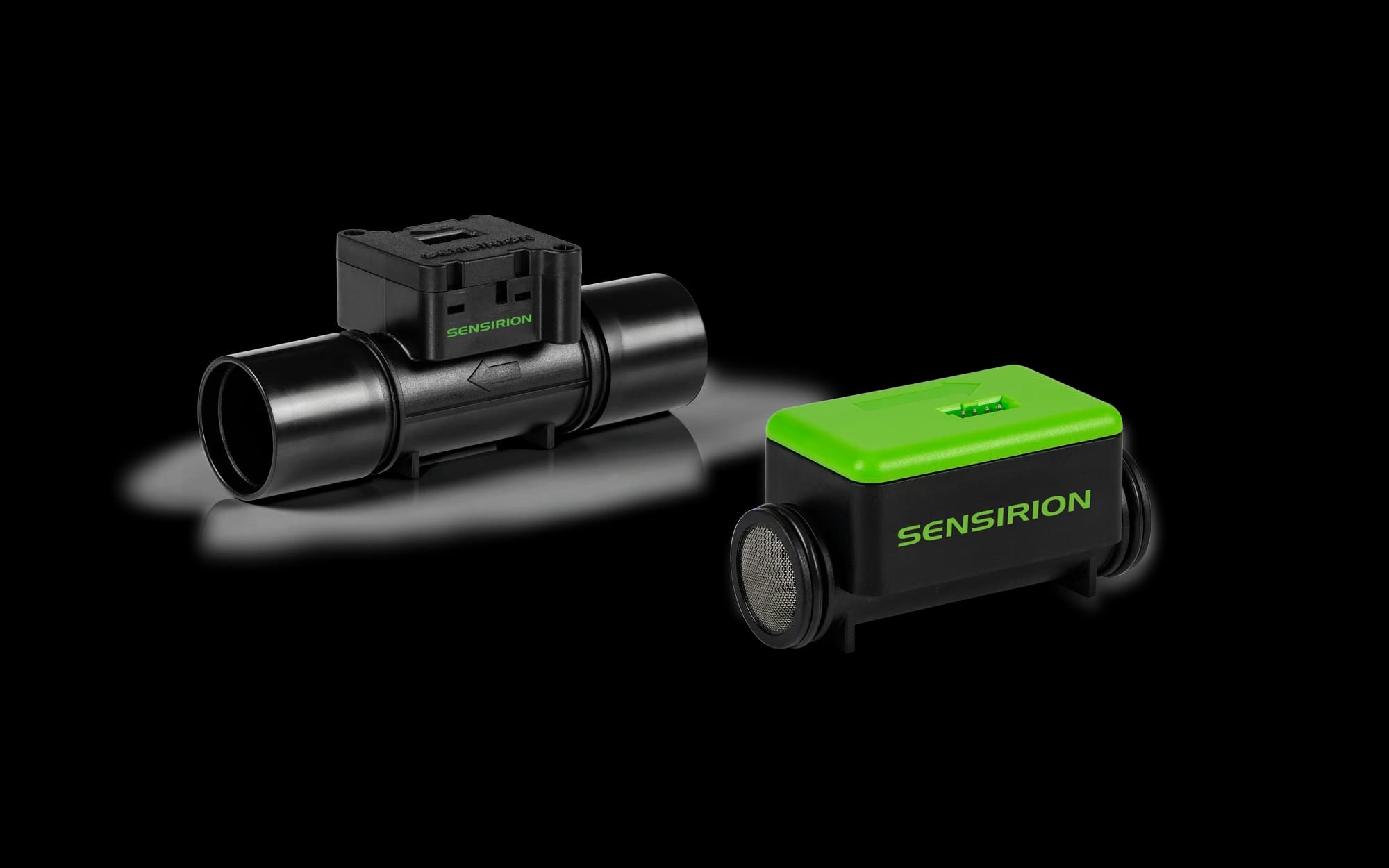
Die Weiterentwicklung der Beatmungsgeräte war immer auch an die zur Verfügung stehende Sensortechnologie gekoppelt. Von den anfangs eingesetzten Schwebekörper-Durchflussmesser über Flussmessungen mit Differenzdrucksensoren an Blenden oder Heizdraht-Anemometern hat sich auch die Sensormesstechnik stark weiterentwickelt, um mit den steigenden Anforderungen der Beatmungsgeräte Schritt zu halten. EineWeiterentwicklung des Heizdraht-Anemometers ist die CMOSens® Technologie von Sensirion, die in allen Massenflusssensoren und Differenzdrucksensoren von Sensirion zum Einsatz kommt. Mit der CMOSens®Technologie hat Sensirion ein auf MEMS-Technologie (Mikro-Elektro-Mechanisches System) basierendes und stetig wachsendes Sensorportfolio, welches inzwischen alle Sensoranforderungen eines Beatmungsgerätesabdeckt:
- Inspiratorische Sensorlösung (I), zur genauen und verzögerungsfreien Steuerung des Gebläses und zur Überwachung des inspiratorischen Luftflusses
- Exspiratorische Sensorlösung (E) zum Abgleich der vom Patienten ausgeatmeten Luft mit der inspiratorisch beatmeten Luft
- Proximale Sensorlösung (P) zur Messung der inhalierten und exhalierten Luft direkt beim Patienten mit höchster Genauigkeit
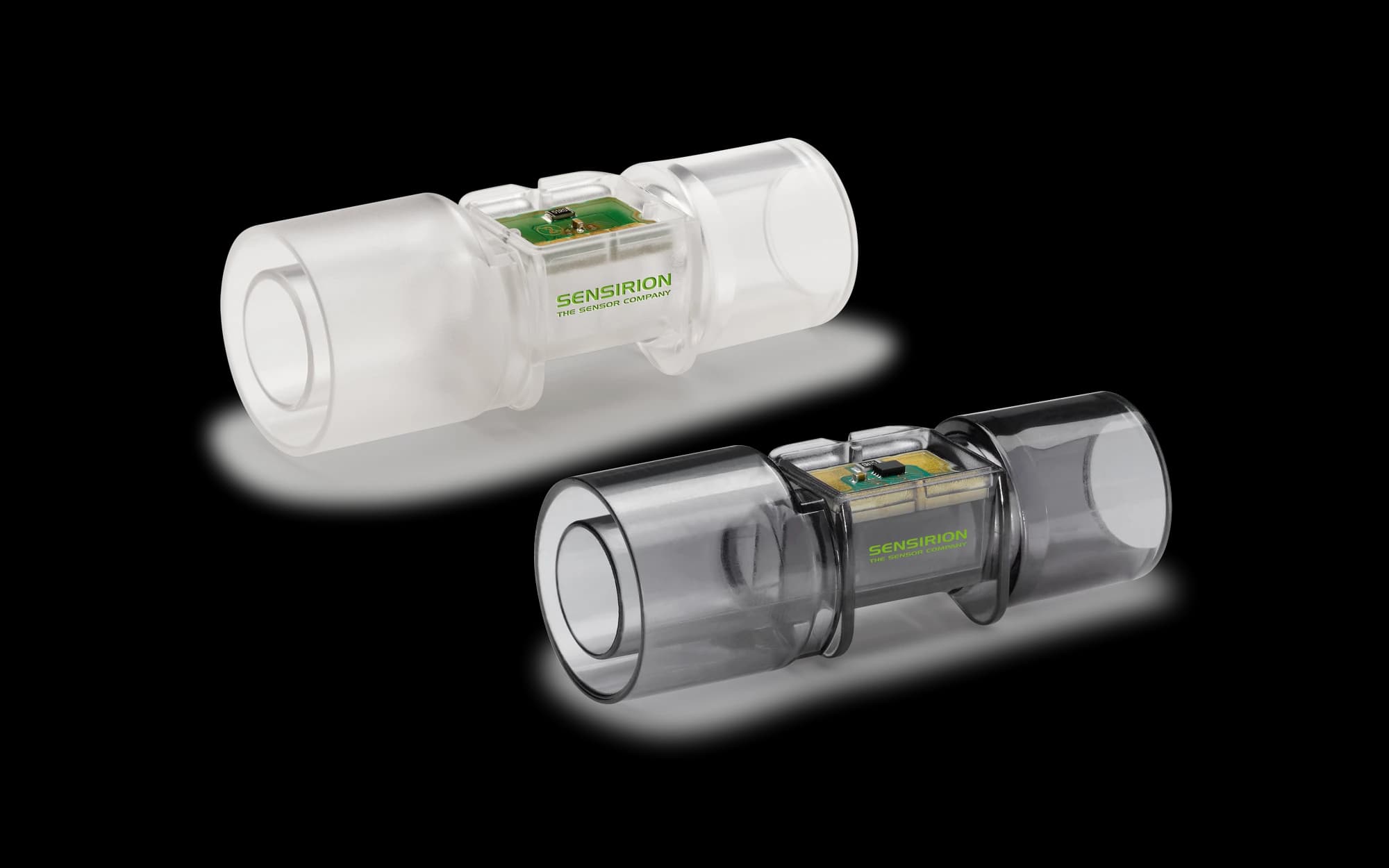
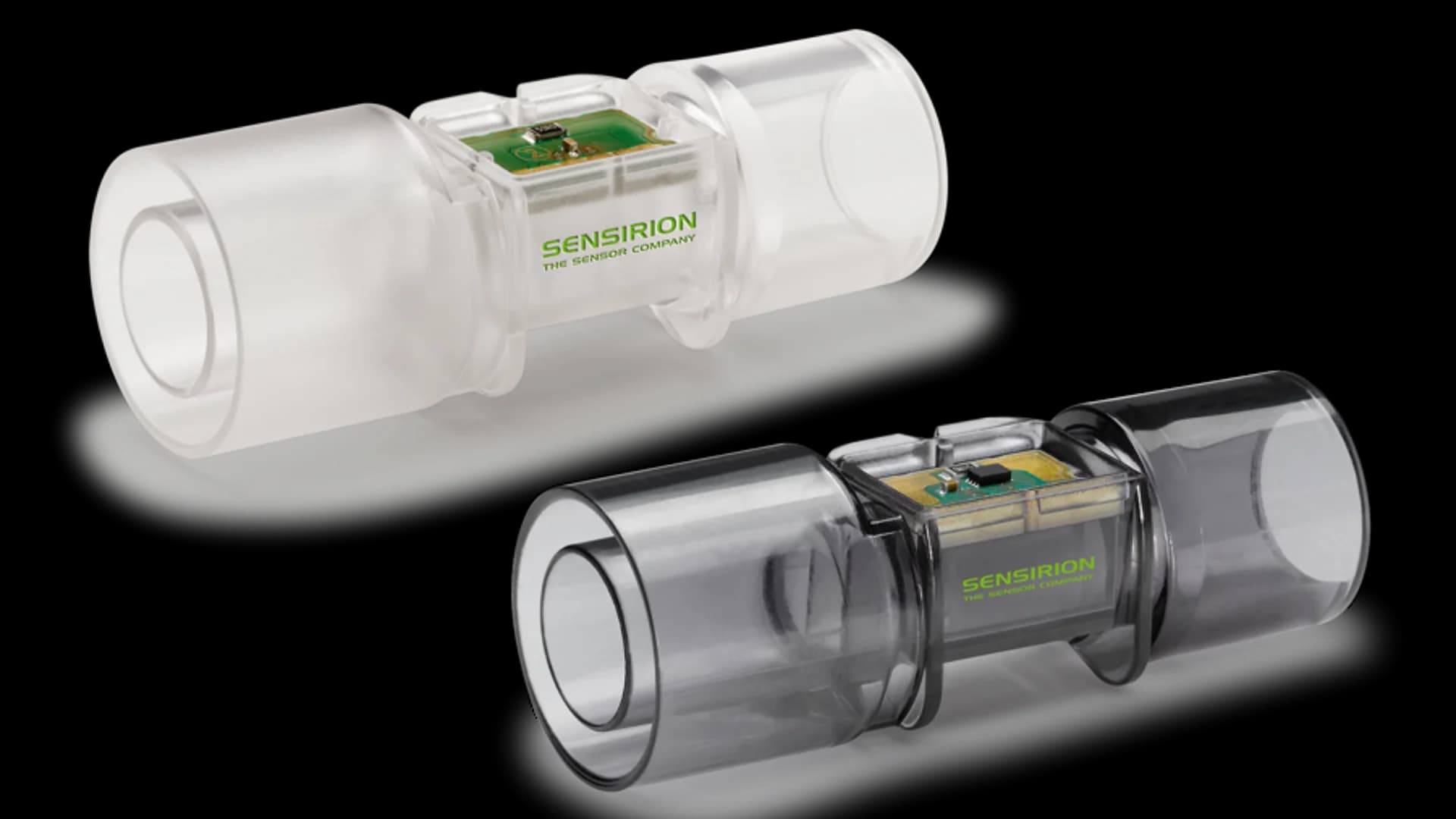
Insbesondere bei der proximalen Messung deckt das Sensirion-Sensorportfolio sowohl Beatmungsanwendungen der Erwachsenen-Therapie als auch der Neonatologie mit Einweg- und Mehrwegsensorlösungen ab. Da sowohl die exspiratorischen als auch die proximalen Sensoren mit feuchter oder kontaminierter Luft des Patienten in Kontakt kommen, ist hier ein Austausch oder eine Reinigung unverzichtbar. Aus diesem Grund lassen sich alle Mehrwegsensorlösungen mit verschiedenen Methoden von Waschen bis hin zu Autoklavieren (135 °C, >2 bar Druck und 100% relativer Feuchte) reinigen.
Vorteile der Next-Generation-Flussmesstechnologie
Einige der wichtigsten Unterschiede zur Vorgängertechnologie, den Heizdraht-Anemometern, bestehen darin, dass die modernen Durchflusssensorlösungen ein digitales und vollständig kalibriertes und temperaturkompensiertes Ausgangssignal ausgeben. Damit können die Sensoren direkt und ohne vorgängige, zeitraubende oder periodisch zu wiederholende Kalibration beim Patienten eingesetzt werden. Weiterhin erlauben die Sensoren symmetrisch in beide Richtungen zu messen. Die robuste Sensortechnologie benötigt dabei keinen Nullpunktabgleich, driftet nicht mit der Zeit davon und muss über die Sensorlebensdauer nicht kalibriert werden. Die Technologie erlaubt ausserdem einen hysteresefreien und positionsunabhängigen Einsatz mit einem beeindruckenden dynamischen Messbereich und einer hohen Messempfindlichkeit. Da das Messsignal direkt im Sensor verarbeitet wird und die digitalen Messwerte ausgegeben werden, fallen keine weiteren kostspieligen Bauteile wie A/D-Wandler für den Einsatz an. Alle diese Vorteile ermöglichen den Krankenpflegern und dem medizinischem Personal eine einfache und schnelle Handhabung der Beatmung von Patienten, was sowohl im anspruchsvollen Segment der Notfallbeatmung als auch im subakuten Bereich und in der häuslichen Pflege entscheidende Vorteile bringt.
Anforderungen an die (proximale) Flusssensoren
Die Anforderungen an die proximalen Durchflusssensoren sind vielseitig und herausfordernd. Die Sensoren müssen zuverlässig und zugleich kostengünstig sein, eine hohe Langzeitstabilität bieten und darüber hinaus zahlreiche weitere beatmungsgerätespezifische Eigenschaften (beispielsweise ein geringer Druckabfall, ein geringes Totraumvolumen, einen bidirektionalen Messbereich und eine hohe Empfindlichkeit) erfüllen, um eine moderne patientenorientierte Beatmung zu ermöglichen. Ausserdem gelten besonders hohe Anforderungen in Bezug auf hygienische Sterilisation, da die Patienten mit Luft in Kontakt kommen, die potenziell mit Krankheitserregern kontaminiert ist.
Einsatz mit hoher Feuchtigkeit
Eine Achillesferse aller am Markt befindlichen Luftflusssensoren ist der Einsatz in Kombination mit Befeuchtungsgeräten. Wie eingangs beschrieben, ist deren Einsatz nicht nur aus Komfortgründen für die Therapie wichtig und wird daher entsprechend häufig eingesetzt. Dabei macht die hohe Feuchtigkeit durch Kondensation zu makroskopischen Tropfen in kühleren Teilen des Beatmungskreislaufes Probleme. Als Lösungfür diesen schwierigen, aber weitverbreiteten Anwendungsfall werden alle proximalen und exspiratorischen Sensoren von Sensirion mit einem zusätzlichen externen Heizelement ausgestattet. Der Betrieb dieses Heizelements mit maximal 0,5 W reicht bereits aus, um Kondensation im Sensor zuverlässig zu verhindern und damit einen langzeitstabilen und zuverlässigen Betrieb zu gewährleisten.
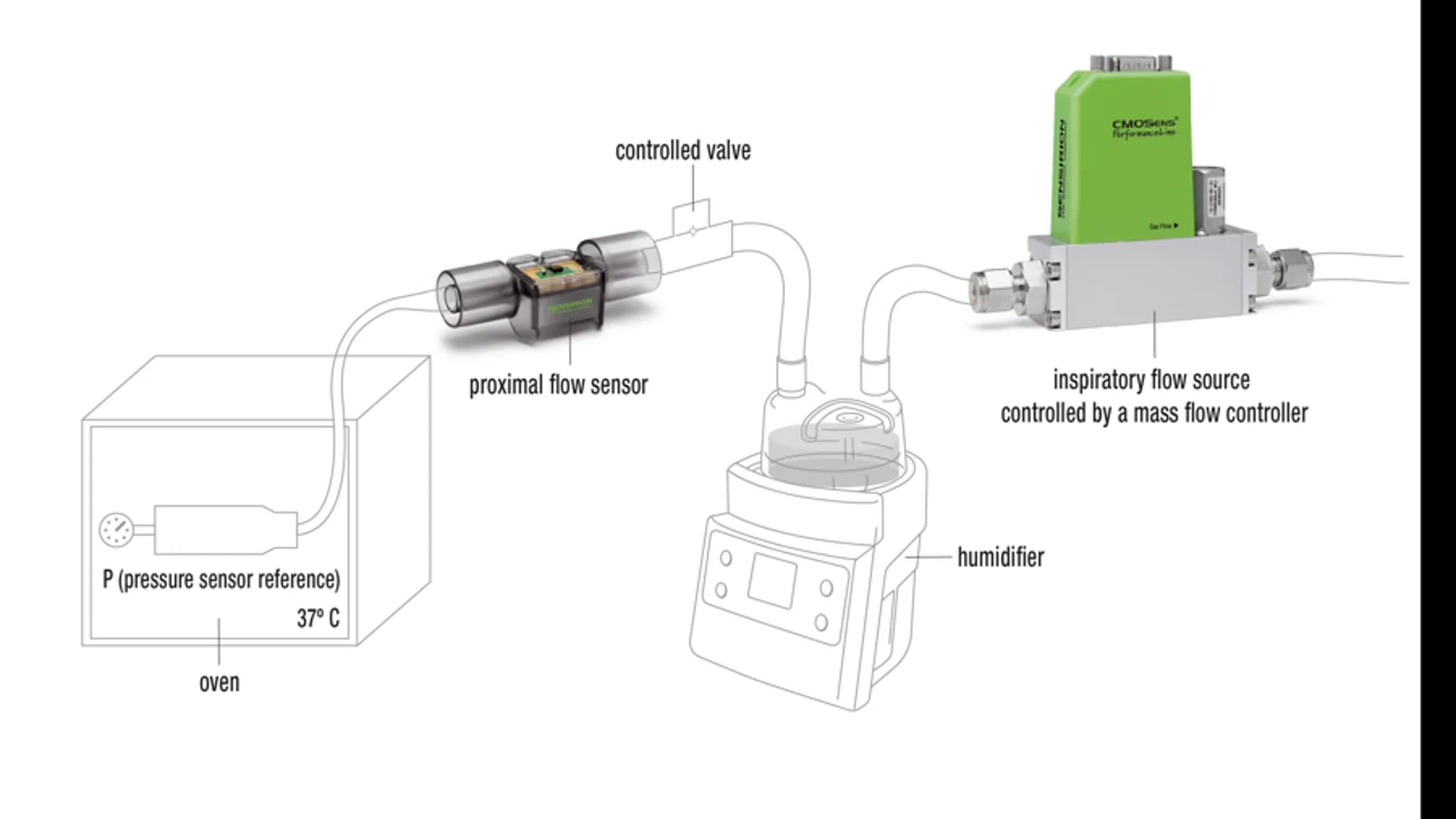
Dies wurde an einem simulierten neonatologischen Beatmungsfall mit sehr feuchter Luft und kleinstem Tidalvolumen von nur 5 ml unter Beweis gestellt. Der in Abbildung 3 skizzierte Aufbau zeigt, dass ein in der Beatmung typisch eingesetztes Befeuchtungsgerät für die starke Befeuchtung der Atemluft sorgt. Der im Ofen bei37 °C befindliche Stahlzylinder simuliert die Lunge des Säuglings mit der angeschlossenen Drucksensorreferenz. Das gesteuerte Ventil wird dabei für den inspiratorischen Atemzyklus geschlossen und für den exspiratorischen Atemzyklus einmal pro Sekunde geöffnet.
Ohne den Einsatz des Heizers sieht man, wie über den Verlauf von 16 Stunden während der Beatmung von demsehr kleinen 5 ml Tidalvolumen immer wieder einzelne Wassertropfen über die Sensoroberfläche laufen und füreine Verfälschung der Messwerte sorgen. Dies ist an den Abweichungen des exspiratorischen/inspiratorischen Volumens zum Referenzvolumen aus Abbildung 4 (oben) gut zu erkennen.
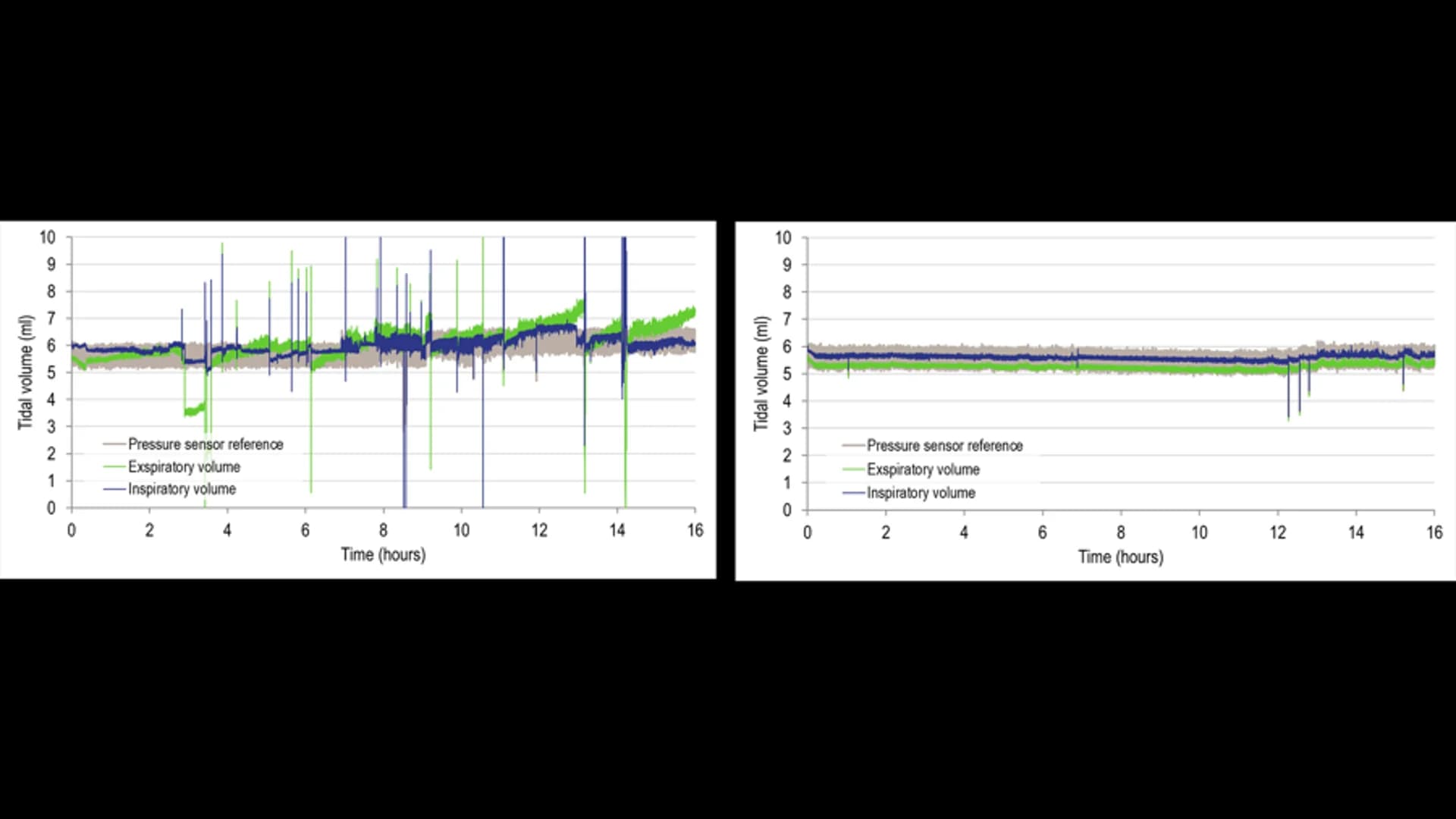
Umgekehrt verhält es sich, wenn das Heizelement eingeschaltet ist. Über den gesamten Verlauf der 16 Stunden Beatmung kam es zu keiner nennenswerten Beeinträchtigung der proximalen Messung durch die hohe Feuchte.
Ausblick
Der Einsatz und die Verbreitung von Beatmungsgeräten werden auch in Zukunft aufgrund der zunehmenden Zahl Lungenerkrankungen weiter stark wachsen. Moderne Beatmungsgeräte stellen dabei stets steigende Anforderungen an die Sensorik, um die Patienten und deren Therapie in den Mittelpunkt stellen zu können. Die CMOSens® Technologie begründete eine neue Generation von Flusssensoren, die sich bereits millionenfach im Feld bei CPAP-Geräten oder im Automobilbereich bewährt haben. Die Vorteile für Beatmungsgeräte sind dabei evident. Der gewaltige technologische Vorsprung erlaubt es den Herstellern, bereits heute die nächsten Quantensprünge in der Beatmung einzuläuten.